An Open Letter to the UCs

Teaching

Today, I have set up appointments to meet with six former students who want to get advice for classes to take, for improving their writing further, for choosing a grad program, for life.

It’s Summer Session 2. I honestly can’t remember the last time I took a summer session off.* After many long years, I finally am. (Not the whole summer, mind you; I just got back from an intensive Summer Abroad course, teaching 8 units in 4 weeks.)

But I’m still answering messages from my students. And I’m still going to pay to park so I can hold some office hours to help them.**

Having office hours requires an office.

So imagine my distress to learn that in the current bargaining session with my union, you have proposed taking my office away.

The laws (and you) require that I keep my students’ confidentiality. As I’m sure you understand, students bring up confidential information when they meet with me. We discuss their grades, their health problems, their hesitation in coming out to their parents, their sometimes difficult relationships with other people here.

I am required to keep this information confidential, so I need an office.

Common decency requires that other things be kept confidential, though the law doesn’t say anything about it. Sometimes, they’re homesick, crying, angry, despondent. They tell me about how their dreams are being crushed, how their parents don’t want them to pursue what they care about, how they need help fighting for a new dream.

Honor requires me to keep this confidential, so I need an office.

You say I could do all of this without my own office, that I just need a locker. What about the student who needs to talk through how to survive college now that her parents have been deported? The student who is being sent back to China after failing too many classes? The student who doesn’t know how to talk about how he used to cut himself, but wants to try?

Yes, these students should talk to counselors, but some of them are told they have to wait to do so. And, quite frankly, they often come to me first. And in emergencies, I walk them to the counseling center.

It’s vital that these students can come to me in a safe location, not just try to catch me at my locker, so I need an office.

You require me to be a mandatory reporter, so I need an office.

You require me to keep any projects (which are confidential) they haven’t picked up for a year, so I need an office.

I teach twice as many classes (more actually, with the independent studies and freshman seminars) as my tenured peers, which requires lots of office hours, so I need an office.

Speaking of independent studies, the classroom for them is my office, so I need an office.***

Since I prepare syllabi and grade essays and grade homework, I need an office.

Half of the students in my always-full office hours are former students. Many of them end up asking me for letters of recommendation and for mentoring.

Since I still meet with and write for those former students, I need an office.

I am currently in charge of the Upper Division Composition Exam. Hundreds of confidential files live in my office and, at certain times of year, need to be spread out all over my desk. Lots of confidential conversations about the exam happen there as well. Thus, I need an office.

(There is a staff person assigned to assist me with the Upper Division Composition Exam. It would be awkward if I didn’t have an office but she did, so I need an office.)

I serve on several campus committees, so I need an office.

All of the grad students in my building have offices, whether they’re teaching or not, whether they’re staying away from campus for the quarter or not. I work with some of them. The idea that I would have to go to their office to talk about their dissertations because the university sees them (but not me) as deserving of one is absurd, so I need an office.

I am an official mentor for the Guardian program, so I need an office.

I am an unofficial mentor for lots of other students, many of whom encounter me through the work I do with STEP, so I need an office.

I am the faculty adviser for a student group; I am with the students at least once a week, so I need an office.

When I publish the peer-reviewed journal I edit, “UC Davis” is behind my name. When I publish articles and books (I have two books coming out this year!), “UC Davis” is behind my name. When I present at conferences (nine this calendar year!), “UC Davis” is behind my name. When give guest lectures, “UC Davis” is behind my name.

Taking away my office implies that my research has no value here, even though you’re happy to feature that work in your publicity.

I’m assuming you would rather I keep saying “UC Davis” instead of “Independent Scholar” when I do these things, so I need an office.

To keep my job, you require that my teaching be “excellent.”**** What makes me “excellent” is the time and attention I give my students, not just my in-class performance. To remain excellent, I need an office.

I am an award-winning teacher, partially because I have an office in which to do all of these things.

My fellow lecturers in this system all do much more than just teach and go home. We care about our students–we work with them, listen to them, guide them, and inspire them, and we strive for excellence in everything we do, so we need offices.

Endnotes:

*This letter is not about how you only pay me 60% of my class rate when I teach in the summer, even though I have to do the same amount of work as I do in a regular term.

**This letter is not about how you charge me hundreds of dollars to park at work every year.

***This letter is not about how the students pay you to do independent studies with me but how you not only refuse to pay me, you refuse to consider these extra courses when I ask for raises. It is also not about how you’re trying to change the guidelines so I can never get another merit raise again.

****This letter is not about how you are also trying to change my contract to say that I can be fired at any time, with no notice or cause.

Students, if you’re reading this and wondering whom to talk to about how all of your teachers, not just tenure-track professors, need offices, here’s where to start:

Professor Kristin Lagattuta, Chair, Academic Senate, 402 Mrak Hall,
University of California, Davis, 95616, (530) 752-4919, aschair@ucdavis.edu

Gary May, Chancellor, Fifth Floor, Mrak Hall, University of California, Davis
(530) 752-2065, chancellor@ucdavis.edu

Janet Napolitano, President, University of California, 1111 Franklin St., 12th Floor, Oakland, CA 94607, president@ucop.edu

Eleni Kounalakis, Lieutenant Governor, State Capitol, Suite 1114, Sacramento, CA 95814, (916) 445-8994, https://ltg.ca.gov/contact/

Assemblymember Cecilia Aguiar-Curry, State Capitol, P.O. Box 942849, Sacramento, CA 94249-0004,
Tel: (916) 319 2004, https://lcmspubcontact.lc.ca.gov/PublicLCMS/ContactPopup.php?district=AD04

Senator Bill Dodd, State Capitol, Room 4032, Sacramento,  CA  95814, (916) 651-4003, https://sd03.senate.ca.gov/contact

[If you’re not from Davis, you can look up their representatives here: http://findyourrep.legislature.ca.gov]

Share
1 comment

Lessons from My Doctor Who Seminar (2019)

Movies & Television & Theatre, Teaching

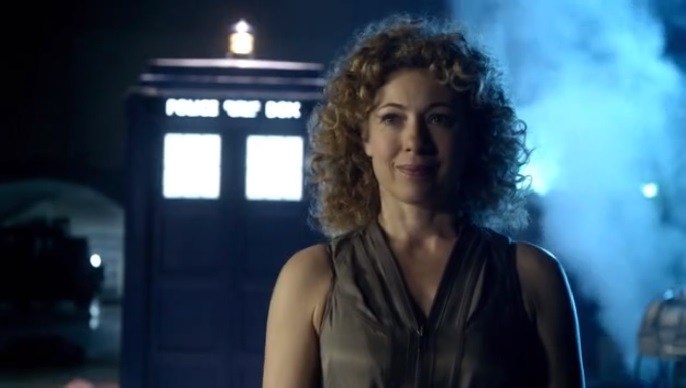
In 2017, I taught my first seminar on Doctor Who. This term saw its first regeneration.

Lessons from my class:

Some of the students are just as ambivalent about technology as we are (this comes as a relief).

Many of them were amazed by the revelation that the Daleks are stand-ins for Nazis. (I sometimes forget what surprises freshmen, in terms of literary analysis.)

A few of the students hadn’t watched any Doctor Who before. They all reported liking it, but a couple said they weren’t going to watch the whole series because it’s too many seasons (and they’re just talking about doctor 9 on) to catch up on.

Lesson: some of this generation are quitters.

I let the students vote for themes to discuss in the last few weeks–this doesn’t always go well (the same thing happens in my Simpsons seminar). One of the themes they picked this time was happiness. A few were frustrated that class discussion kept going onto what makes us unhappy (what did they think was going to happen?).

In our poll on scariest monsters, the weeping angels won.

In our poll on best doctors, David Tennant won.

Martha and Clara were both lambasted by many for being our least favorite companions, but many students came around on Martha after I pushed them on it one day. They like that she’s a doctor; they like that she chose to leave–to move on.

We all love Donna.

We all love Jack.

We all love River Song.

In fact, the spin-off series we want to see most is The Adventures of River Song.*

I’m disappointed that none of the students took me up on the challenge of writing the fan script explaining Jim the Fish.

My favorite comment in the whole quarter?

A student’s observation that the humans who travel with the doctor are his emotional therapy animals.

*I’ve spitballed a few alternate titles:

Dr. Song, Non-Medicine Woman

Professor Song and the Temple of Doom

Kiss of the River Song

Melody/Song

For Whom the Angels Weep

Alias River Song

Bringing up River Song

River Song and the Chamber of Secrets

It’s a Mad Mad Mad Mad Universe

I Walked with a Time Lord

Touched by a Time Lord

River Song’s Guide to the Galaxy

Red Lipstick Diaries

Interview with an Assassin

A Wrinkle in Time and Space

The Woman Warrior

The Professor is In

Welcome Back, River Song

Not Mostly Harmless

Spaced

River Song’s Adventures in Wonderland

Mapping the River Song

Let the Right River Song In

Lifestyles of the Rich and Infamous

My Big Fat Gallifreyan Wedding

Lost in Tardis Translation

Professor River Song, Actually

The Absolutely True Diary of a Part-Time Assassin

River Song of Arabia

River Song’s Web

Educating River

Spoilers!

The Diary of River Song

Are You There Doctor? It’s Me, River Song

Diatribes of a Mad Professor

Doctor Song, I Presume?

Hello, Sweetie

Love’s Labors Lost

Close Encounters of the River Song Kind

[Note: almost all of these could also be porn titles]

Share
0 comments

Guest Blog: Things I Wish I Learned in College

Teaching

by D’lana Pearce

On June 15th, 2019, I will be a college graduate. This is supposed to be the culmination of my hard work and yet I find myself dreading the future. I have a substantial knowledge on inequality (racial, sexual, and gender), I know a lot about colonization, political processes and corruption, what ATP is and how it works, cellular death, regression analysis, integration, and what a comma splice is (though I still have them in my writing–no one is perfect). However, I feel unprepared for the future. I have a large amount of student loan debt (well above the average), as well as credit card debt, and a general concern for life outside of the cushion of being a college student. I find myself asking a lot of questions, most of which don’t even pertain to college but are things I will have to learn quickly to be successful. Some of my questions are for far in the future but others I am stressed about at this very moment. I find myself up late at night, distracted by my thoughts about what I will do with my life once I graduate. I worry I will make the wrong career choice, professional behavior, or financial decisions and all my work in college will be rendered useless.

Some of my questions are:

1. How do I focus on health and wellness with a busy schedule?

2. How do property taxes work?

3. How do I understand my health insurance benefits?

4. How do I know if I am making enough money to buy a house?

5. Is better to not get a tax refund (and not owe anything) or to get a refund?

6. Is it better to have a will or a trust? At what age do I draft them?

7. How often do I *need* to go to the doctor?

8. How do I prepare for a professional interview? I’ve worked various minimum wage jobs but I have no idea what to expect when I go into interviews for a career.

9. What exactly is business casual?

10. How should I manage my personal finances?

11. What jobs value the skills my major teaches?

12. How do I network?

13. How do I apply theoretical course concepts to a job? I find it hard to believe that Karl Marx will be a daily conversation topic and yet I learn about him in almost every Sociology course.

14. How much do employers care about what I have posted on social media?

It’s not that I would expect a college to have a course teaching these things. In fact, many of these questions cannot be taught in one course. However, as I find myself pushed into the real world, I am finding that everything I know is not nearly as useful as I thought it was. It’s scary to find yourself in a position where you must make decisions that will truly alter your life with almost no experience and no textbook to look for answers in.

Share
0 comments

Guest Blog: Good Teachers

Teaching

Once again, D’Lana Pearce weighs in on teaching.

My ideal class is as follows: PowerPoints uploaded before class so that I can follow along, podcasts of lectures, no mandatory attendance, no group projects, no class participation, a clear syllabus with all due dates listed in categories, a detailed breakdown of what will be covered in each class, and all assignments prompts posted on the first day of class. In short – I want some of my work done for me.

My favorite professors at UC Davis have all required attendance, group projects in some form, and class participation. None of them have uploaded PowerPoints before class and none of them have done podcasts.

In my opinion, the best professor in my major (Sociology) is the professor that taught me about social problems and is currently teaching me about political sociology. This professor does not teach easy classes. The readings are long, and they are complicated. Many of the topics are graduate level. You will not pass any class they teach if you slack on the readings. Participation is worth enough to change your grade by an entire letter. Most of the class is lecture based with some writing on the chalkboard and the occasional graph on a PowerPoint. You must work for your grade. In theory I should hate it, but I don’t. I first took this professor in Fall 2017 when I was readmitted to UC Davis. I liked them so much that I am currently taking three upper division Sociology classes, which are all writing based, along with a writing internship and a seminar that requires a term paper. I could have avoided this by taking one of my classes with a different professor, but I know that I will learn more with this professor.

The best writing professor I have ever had made me work for my grade (it was a B and I have never worked so hard for a B in my life). The required writings took me out of my comfort zone. Even after I edited them they still found mistakes. To be completely honest, I didn’t even realize how much I had learned until I looked at my first and last papers from that class. Their class made me want to minor in writing. Up until then I absolutely HATED writing. I’ve since then discovered I like the various ways I can express myself through writing.

These two professors are two different people. They teach different topics, they have different backgrounds, and they have different personalities. Their organization is one of their only similarities. Both put everything they expect from their students in the syllabus. There are clear deadlines and expectations. As a student, I have found, there is nothing I appreciate more. The readings they assigned are related to each lecture and the information gathered from those readings helps stimulate class conversation, and learning. The material for the midterm and final is from these readings. Additionally, they are applicable outside of the class.

Both professors have mixed reviews on ratemyprofessor. The negative reviews all say the same thing. They are too hard. They make you work for your grade and there is a lot of work required. College professors that make you work for your grade? Shocking.

I don’t think there is such thing as a perfect educator. I do think that some genuinely care about their students success and those are the ones who leave an impression.

Share
0 comments

Guest Blog: Bad Teachers

Teaching

(I asked a graduating UCD student I’m working with, D’Lana Pearce, to write about bad teachers for the blog.)

I love school and I love learning. When I came to college I was excited for all the new material I would learn. This is why I have found it particularly disappointing that *some* of the professors at UC Davis are absolutely awful.

Many of my professors have simply not cared. We, the students, understand this is a research-based university. We get that many of our professors have a bigger passion for research than teaching. Yet these professors are still conducting research at a college. Why bother teaching a class if it is not enjoyable? I have had professors state that they do not care about teaching and that all questions need to go to the TA. I have had professors that are grad students and are better at teaching than the tenured professors who are “experts” on the topic.

When I was a sophomore, I was struggling with anxiety (I still do to this day), and I did horrible on a midterm. My conversation with the math professor went like this:

Me: I did not perform well on the most recent exam and I was wondering if we could schedule a time to meet. I’d like to see what mistakes I’m making so that I can work to improve my grade in this class. I love math and I really want to do well in your class.

Professor: Sure, you can come to office hours.

Me: Unfortunately, I have a class during office hours and attendance is mandatory. Is there any other time that works for you before the next exam?

Professor: My office hours are for students. I’m too busy with my research to open more time. Skip your other class.

Situations like this are common and infuriating. Helping students succeed is not a burden. I know that there are not enough hours in the week for a professor to plan one-on-one meetings with every student, but I clearly needed help and I was trying to be responsible by reaching out and attempting to learn more. It makes me, and many of my peers, wonder why we even chose this school.

Good professors may outnumber poor professors but the discouragement from a professor who simply does not care is not something I can forget.

Share
0 comments

A Short Autobiography

Teaching, Words, words, words

This quarter, I’m teaching 104J: Writing in Social Justice.

The first assignment is an autobiography to share with the class–it can be in any genre but must be no more than 500 words.

I decided to write one too.

What came out, as I noted, wasn’t what I wanted or expected.

My brain is still processing some core issues–my relationship with Daddy & what I’ve learned about my mind/body connection.

I’m going to write one of these every time I teach this class, to see how it changes.

Without further ado:

31 True Things

  1. Karma is my given name.
  2. (Dr. is my earned one.)
  3. Someone once said I was in chronic pain because my name was not Christian—God was punishing me for my father’s choices.
  4. My father died when I was very young.
  5. My faith in God died much later.
  6. My faith was in “Daddy,” my grandfather who raised me when I was little.
  7. My faith in him got stronger when my mother, an emotionally abusive alcoholic, took me back.
  8. I lost my Daddy two years ago next month.
  9. His disapproval lacerates me.
  10. And remembering I disapproved of his politics, his racism, his disapproval, doesn’t even anything out.
  11. I argue with him and others in my head constantly.
  12. That’s part of being a chronic worrier.
  13. Chronic worrying and chronic pain are both tied to high ACE (childhood trauma) scores and PTSD.
  14. We think that if we keep worrying, keep thinking, keep spinning, we’ll find a way out of chaos.
  15. The “unexplainable” spasms are the same—every muscle tense and ready—but ironically too tense to physically run away from whatever they’re afraid of, if I had to.
  16. I’m also a workaholic.
  17. People say I work harder than anyone they know.
  18. The tone is awe, with overtones of worry & pity.
  19. I’m in a trap, working hard to pay down student loans and medical debt.
  20. Then my doctors tell me to work less, because I’m killing myself.
  21. Sometimes I think I keep trying to do everything at once—publishing, traveling, teaching—because I might not have much time left.
  22. This isn’t how I wanted this list to go.
  23. I wanted images of geekery, theatre, writing, cats, books, friends, family, cooking, pop culture, teaching, . . .
  24. Maybe I would open up about my fears & how I’m insecure about my body, and vain about my hair, and how I’ve loved and lost but sometimes not loved at all.
  25. I wanted this to be a list to show I’ve survived.
  26. And if multiple degrees and (a)vocations I love and a great chosen family and putting my son through his first quarter century are the criteria, how I’ve thrived.
  27. He was born to a teenage mother, but his ACE score is a hell of a lot lower than mine.
  28. That might be my greatest accomplishment.
  29. No—it’s that he’s smart & funny, and we genuinely like each other.
  30. I make jokes about all of these things in my stand-up.
  31. Lord Byron said, “And if I laugh at any mortal thing, ‘tis that I may not weep.”
Share
1 comment

Hats Off to the Sub

Teaching

“How did the presentations go?” I asked my class this afternoon.

They all started talking at once, not about the presentations, but about the substitute teacher.

I have two conferences this month, so I scheduled student presentations for the two days I’d be gone–something that’s easy for a sub to supervise. I didn’t get to choose my sub–it’s someone I’ve never met, actually, a full-timer at SCC, who usually teaches on the Sacramento campus.

Their complaints were numerous–she started roll before class started and then “tardy-shamed” people who weren’t actually late. She cut off their presentations and was strict with questions. She criticized how I wrote the presentation instructions (I was surprised she did something like that in front of them). She made a student take his baseball cap off.

“Well, you’ll see her on Thursday, for the next group of students to do presentations while I’m gone.”

They groaned.

“Are you going to wear your hat?” I asked the student who always wears a hat.

Another student: “Maybe we should all wear hats.”

They got really excited.

“Could we?”

“I can’t condemn peaceful protest. . . but please make sure you actually get to do your presentations.”

Tune in next week . . .

Share
1 comment

“A Bad Writer”

Teaching, Words, words, words

I am always astounded when my students tell me former teachers have told them they’re bad writers.

This quarter, someone implied I had.

We were at a writing workshop with Douglas Abrams, co-author of The Book of Joy. My student said her confidence was shattered–she had thought she was a great writer, but now she knew she was a bad one.

“Who told you that?”

She looked right at me.

I got defensive, immediately.

“I never said that–I would never say that.”

“But I got a bad grade on the punctuation quiz.”

“That was an automated quiz–I haven’t even seen it. And I certainly haven’t told you you’re a bad writer.”

The student seemed to think my distinction wasn’t important.

(Abrams tried to get us back on track by telling her to just put a comma wherever she would pause, which caused ALL of my students to swivel their heads to me, since I had told them that only people who don’t know the formal rules (and who aren’t professional editors) say that.)

My student’s feelings were hurt by the quiz results, though. She had been in AP English. She had been an editor for her school’s yearbook. My assuring the class that I go over punctuation with my graduate students hadn’t mollified her.

I tell my students that we all need more practice–that’s why writing classes, from remedial to graduate level, exist. I also tell them that I am usually their first and last hope at getting an actual explanation of punctuation.

None of my teachers had really gone over it. Having a BA in English doesn’t necessarily prepare you for teaching writing, especially at the nuts and bolts level. I taught myself the rules (and the names of them) when I was becoming a professional writing teacher, a professional editor. In other words, I had to go out of my way to understand the difference between the restrictive and nonrestrictive clause, the cumulative and the coordinating adjective.

(This lack of formal training is what leads to so many people saying that commas and pauses are interchangeable.)

My student isn’t a bad writer–she did fine in my class, especially since grammar is one small part of writing and therefore of writing instruction. But she is a graduating senior who makes comma and semicolon mistakes. The latter is compounded by her inability to spot and fix her unintentional fragments.

But I’m worried that her assumption about what I was “saying” with a quiz grade will change her memory of what I did say–what I would say.

Share
0 comments

A Writing Teacher Fantasy

Teaching

What if I could teach writing this way:

In class, we go over all the things we do now, from the development of a solid research question to fine editing.

But I don’t grade a student’s paper until it’s good.

If the student turns in something with a terrible title (“Essay 2”) or even a meh one (“Antibiotic Resistance”), I get to hand it back. “In the real world, I wouldn’t read this.”

If the introduction is boring, I get to hand it back.

If there’s no sense of audience, I get to hand it back.

If the organization makes no sense, I get to hand it back.

If the counter-argument is a straw man, I get to hand it back.

If there are a bunch of grammar errors, I get to hand it back.

If the conclusion is just a summary, I get to hand it back.

Etc.

The class would be pass/fail. To pass, the student would have to hand me a paper I was okay with (if not thrilled by) the whole way through.

Share
0 comments

TA Flashbacks

Teaching

About a third of the way through my guest lecture, the professor said, “I’m going to stop you there. I don’t agree with your feminist reading of the text.”

I was Professor Levin’s TA in a Shakespeare course. I already had my Masters–I’d written a book to get it, on the figure of the witch on the British stage, from Shakespeare to Churchill. Chapter One was about Macbeth, and even though I didn’t use it in the book, I’d written another chapter about witchcraft in The Tempest.

Thus, when Levin invited me to give a talk, I proposed a brief talk based on that.

The Tempest features a mage, Prospero, which is tricky, since King James really hated witches.

He had written an entire book about them, Daemonologie, in which he explained how all magic is in service of the dark forces, with tangents about how it’s possible for the Devil to impregnate a woman, since he can’t make sperm (spoiler: he gets sperm from a corpse).

While all witches were bad, he did make a common distinction between male and female magic. Male magic was “white”–it’s what learned men did, in trying to compel the spirits. Female magic was “black,” base, sexual, and destructive. Women were controlled by the devil and usually gave their body to him to seal the pact.

My point was that Sycorax, the unseen (dead) witch in The Tempest was there to foil for Prospero (she is rumored to have gotten pregnant by the devil, etc.). One could view the play with more sympathy towards Prospero due to her (and because Shakespeare allows for multiple interpretations, one might realize they’re not that different).

I got cut off, though.

I had to leave the lectern and take my seat in the back of the room, before Levin told the students that he didn’t approve of feminist theory and that they should forget everything I’d said.

Some of the students emailed me, apologizing for their professor’s behavior, saying they wished they’d been allowed to form an opinion about my point, if only they’d been allowed to hear it.

On the way out of class that day, Levin had asked where I’d gotten all that crap about James’s views.

“From his book, as I said. Have you read Daemonologie?”

“No.”

Every time I teach Shakespeare, as I am this summer, I think about this interaction.

And about the lesson.

A professor stopped a point of view he didn’t understand before hearing it out.

A male professor made a woman sit down before hearing her out.

I’m sure the students learned from that–that he would punish them for even proposing an interpretation he hadn’t thought of.

And that the sexism of King James’s time is still very much with us.

Share
0 comments