The Truth About Letters Rec: Part 1: The Basics

Teaching, Words, words, words

In some of my classes, like the health science writing class, we practice writing statements of purpose for grad school. In one class, I mentioned that they needed to make sure the letters of recommendation were also strong.

Questions and answers about that filled the rest of the period. The students gave me feedback that the detour we took was exceptionally helpful.

In my classes now, I set aside a day they’re turning in a paper to have this talk.

And now I’m reproducing it here.

The Basics

There are several types of letters:

  • Bad
  • Meh
  • Good
  • Great!

I won’t write a bad letter. And I don’t know anyone who relishes doing so. But sometimes a student hounds a teacher after several polite refusals, and the teacher says: Fine. I will tell that school EXACTLY what I think of you.

Meh letters are form letters. They say you’re smart and hardworking, like everyone going to grad school should be. There are no details about you. Everyone reading it knows it’s a form letter. It doesn’t help you.

Good letters make it seem like we actually know you and that we actually recommend you. They talk about you.

Every once in a while, we write a great letter. We go beyond praising you. We make it clear that they’re idiots if they don’t want you, because everyone should want you. These are rare. They are saved for those we’re close to, for those whom we know have struggled, for those who are truly exceptional.

WHAT THEY DON’T ASK:

  • What was the student’s grade in the class?
  • Was s/he/they on time to class?
  • Did s/he/they come to all (or most) classes?
  • Did s/he/they complete the work?

First, your grade is on the transcript. Second, they assume that if we’re recommending you, you did the minimum.

Note: if you brag on your statement or resume about being on time, that’s a red flag. It’s not a skill. It doesn’t make you special. If you think it’s worth mentioning, we know you have a very low bar for yourself.

It’s like saying, “I always showed up to class dressed!”

WHAT DO THE SCHOOLS WANT TO KNOW?

They want to know what kind of person you are, whether we enjoyed working with you, whether they might enjoy working with you. This is about your strengths and weaknesses and personality.

First, they ask us:

  • How long have you known the student?
  • In what capacity have you known the student?
  • How well do you know the student?

If I click “not very well,” I’ve just killed this recommendation. I’m admitting that I have no ethos (credibility) here.

If your recommenders say they don’t know you, there are two possible red flags.

  1. Maybe you didn’t ask someone who actually knows you, because people who know you learn you’re a selfish asshole.
  2. Maybe you never got to know any of us, which means you won’t succeed in graduate school. You can’t hide in the back of a room in a six-person class. If you can’t talk to us, how will you put your committee together? How will you find your mentors? If you can’t find two people in undergrad who can check “fairly well,” then grad school is not for you.

Second, they ask us to rank you. Often it’s this:

Rank the student against all the students you’ve taught:

  • Top 1%
  • Top 5%
  • Top 10%
  • Top 20 %
  • Not in the top 20%

The next bubble sheet:

Rate the student in terms of:

  • leadership
  • oral communication
  • written communication
  • ability to work in a group
  • problem solving
  • ethics
  • ability to work independently
  • responsibility
  • creativity
  • interpersonal skills
  • research ability
  • intelligence
  • critical thinking

Yes, every teacher, not just your writing teacher, is asked whether you can write well.

THE BOTTOM LINE:

We need to know you.

The next post will talk about how to make that happen.

Share
7 comments

What Surprises Our Upper-Division Students

Teaching

Yesterday, I had my upper-division students watch a talk I do for my lower-division ones.

(This recording is from when I gave it to the EOP students a couple of years ago: https://video.ucdavis.edu/media/2015-08-28_STEP_Karma-Waltonen.mp4/0_rd2ugqus.)

I thought it would be a good way for my students to learn more about me, my energy/vibe, and expectations.

My students’ responses have confirmed what I’ve suspected for a long time:

It’s not just lower division students who need a “welcome to college” talk.

I asked the students to tell me what surprised them. Here are the top three answers:

  1. Many didn’t think we cared if they weren’t paying attention or if they were doing something distracting in class.
  2. Some were surprised that their peers are so rude and casual in emails. Others were surprised we think they’re sometimes rude and too casual in emails.
  3. A bunch of them thought it was fine to email us for a letter of rec after never having spoken to us at all.

Maybe your students need to hear my talk too.

Share
0 comments

The 1st Week of Teaching Online

Teaching

It was bumpy, not surprisingly.

All of my students nodded vigorously last week when I said they would have to read all of the instructions carefully.

But the students who were careless and unprepared before are still careless and unprepared now.

There is one advantage–in my intro to lit class, we’re hearing from people who have never spoken in class before, which is awesome.

Some students say they miss class, of course. Some have said they like the screen capture video I made because they got to hear my voice.

One student wrote to me this morning just to say he missed coming to class because it was an oasis for him, a good distraction from the rest of life.

Everyone’s favorite thing so far? A video of one of their TAs fighting a plastic spoon.

Share
0 comments

Trying to stay sane

Teaching

Los Rios, where I’m teaching two semester-length classes, has moved their courses online indefinitely. Davis is also online for the rest of the quarter.

Today will be spent figuring out how to make next week’s classes work (in addition to the other work that was already on the schedule).

The chaos has upped my workload and my “I have to be on the computer” time exponentially. I’m already feeling the strain on my spine.

Frankly, I’m worried about losing my ability to take care of myself under these circumstances. It’s too easy to get lost in tinkering with a syllabus or in grading. And there’s no forced break where I have to walk to class and teach for a few hours, standing up and walking around. (I realize how perverse it sounds to say teaching is a break.)

So if any of you want to send me a message every once in a while, telling me to take a walk around the block or to go pet a cat, it would be welcome.

Share
0 comments

Rally for Teachers–Noon, 2/3, Mrak Hall!

Politics and other nonsense, Teaching

Dear Readers,
Across the UC, people like me are now working without a contract. The UC came in with an insulting proposal at the last minute (after nine months of us trying to work all this out). They offered a new title for the old guard and a couple of tiny raises for the new people. In return, they would get the right to get rid of us very easily (and without enough notice to find another job), creating a system where our jobs are constantly in turn-over, among other things.
Would UC admin ever sign an agreement saying they would be hired for a quarter or a year in a “self-terminating contract”? Of course not.
So we are rallying this Monday–tomorrow–2/3–at noon, on the steps of MRAK Hall.
Please come show your support.

Share
0 comments

My Union is Fighting for Me

Politics and other nonsense, Teaching

My union has been trying to get a decent contract since last March. Our current contract expires THIS FRIDAY.

I’ve written already about how the UC system wants to take our offices away. The sad news is that keeping our offices isn’t even in the top three goals for our current contract.

We want better pay (ex: when the tenured faculty vote to give themselves all a raise, we (the colonists who get no votes) must get that raise too. Last time, the tenured people gave themselves 4%–we were given 3%).

We want more job security (the UC system wants to turn us all into adjuncts, who can be fired at whim, with no real warning, no matter the experience, awards, etc.).

We want to stop being told to do unpaid labor, to stop being punished for it when we resist.

If you’re around, you can come see what’s happening and show your support.

All are welcome to attend bargaining 10-5 at Gladys Valley Hall in the Vet Med center. We’ll be in the following rooms:

Wednesday, 1/29  Room 2030
Thursday, 1/30  Room 2071
Friday, 1/31  Room 2030

Be sure to mark your calendar and make plans to attend our Stand Up for Teaching! rally on Monday, February 3. We’ll meet at the steps of Mrak Hall at noon to show UC management that we’re united in fighting for a strong contract that values the work of all lecturers.

If you have questions, please email us at ucaft2023@gmail.com.

Share
0 comments

What Our Young Academics Know About Nonacademic Sources

Teaching

Teachers, if you haven’t asked your students about nonacademic sources, I advise you do so.

Because I don’t want to be in this dispiriting place alone.

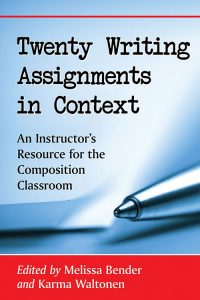
A few years ago, Melissa and I started working on a textbook to teach our students how to find, evaluate, and ethically use sources.

We knew a lot of knowledge was lacking, both from decades of teaching and from the current political crises.

Using our draft chapters has shown me how desperately needed this book really is.

Because now I quiz the students on this subject.

One of our chapter is on evaluating nonacademic sources; it explains the difference between academic and nonacademic, talks about when nonacademic sources are necessary in their writing, discusses how to evaluate news sites, warns about reliance on Google and Wikipedia, gives examples of satire news being mistaken for real news, and lists four kinds of sources that just shouldn’t end up in their writing, unless their paper is about unreliable sources.

(We argue that one should not cite 1) other student papers one finds on the internet, 2) cheat sites, 3) sources with no discernible personal or agency author, and 4) religious texts as incontrovertible evidence in what should be secular arguments.)

My reading quizzes ask students to tell me the difference between academic and nonacademic sources and to name one of the four forbidden types of nonacademic sources they should avoid.

The students who do the reading do fine, of course.

But here’s what many of the upper-division students who skip the reading say:

What’s the difference between an academic and a nonacademic source?

  • Nonacademic sources are written by people who don’t know what they’re talking about.
  • Academic sources are the things our library has. Everything else is nonacademic.
  • Academic sources are reliable. All nonacademic sources are unreliable.

What is one of the four nonacademic sources you should avoid in your writing?

  • blogs
  • news sources
  • film reviews
  • social media posts
  • this is a trick question–you should never use nonacademic sources in your writing

After I take up the quizzes, I have questions for those students. So you can never cite news? If a pediatrician writes a blog about common problems at checkups, can you not use the info just because it’s a blog? How can you write about foreign policy under Trump if you aren’t allowed to ever cite a Tweet? What if you need census data? Will you just have to skip that information because it’s nonacademic? How are you going to write that film paper if you can’t cite nonacademic sources, since films ARE nonacademic sources?

Fellow teachers, if you haven’t had this conversation with your students, I recommend it. It will be eye-opening on both sides. The information generation just isn’t getting enough instruction on how to filter information. If you want Melissa and I to start the conversation for you, our book is coming out soon.

Share
0 comments

Geek Accessories

Misc–karmic mistakes?, Teaching

I got myself a Harry Potter backpack at the start of the year. It tore almost immediately, and the tear is getting bigger.

Just this morning, I was thinking about how I should go back to my very old, but not torn, boring backpack.

Then:

Student A: Is that Harry Potter backpack?

Student B: I noticed it on the first day. It’s how I knew I had signed up for the right class.

Share
1 comment

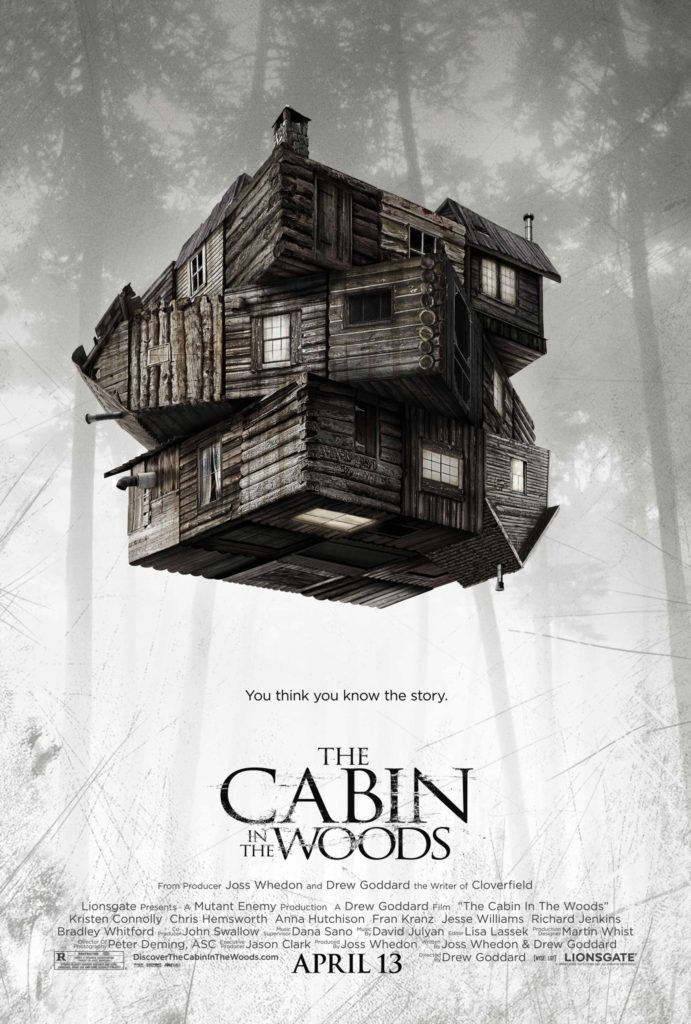
On Teaching Cabin in the Woods: We Are Not Who We Are

Movies & Television & Theatre, Teaching

“Wow. That’s brilliant. I never would have seen that,” several of my students exclaimed after the day’s discussion leader had them rewatch the “set up the kids” scene at the beginning of Cabin in the Woods. The discussion leader pointed out that the jock wasn’t dumb, the virgin wasn’t one, etc.

And the other students were flabbergasted.

Which made me flabbergasted.

But it’s happened each time I teach this film. This class is designed for Film/Media Studies majors, and so my heart breaks when they can’t actually read a film correctly.

To watch Cabin in the Woods and miss that the kids are not actually archetypes, which a surprising number of my students do, means that they misunderstand the initial attempts at characterization, all of the clear references to the designers affecting their behavior and cognition, and one character constantly trying to understand what’s happening.

“And since when does Curt pull this alpha male bullshit? I mean, he’s a sociology major, he’s on full academic scholarship, and now he’s calling his friend an egghead?”

I used to teach this film last, but this term, it will be our first. We’re going to talk about it Wednesday. I even told the students why–not about what exactly other classes were misunderstanding, but that other students were managing to majorly misunderstand significant plot points.

So we’ll see how they do.

When I started teaching Writing in Film Studies a few years ago, I was surprised by how many horror films made it onto my viewing list, since I don’t really like horror films.

Or maybe I don’t like “typical” horror films. And I will admit that I really dislike the serial killer ones. Give me aliens, zombies, vampires, gods–I can escape. Watching regular men kill regular women doesn’t give me catharsis. It leaves me feeling upset for days.

Cabin in the Woods is one of the best of the horror films I love. I didn’t really know what it was going to be about when I headed to the theatre in 2011. But I knew it was a Whedon thing, so it wasn’t going to be ordinary.

The theatre was almost empty. A woman who appeared to have a nice buzz came in and sat down right beside me. Halfway through the movie, she yelled, “This movie is fucking awesome.” The other seven of us in the audience just laughed. Cause it was true.

I was disappointed that Goddard, the director, chose to open the way he did, since it gave away so much of the twist away. But I also know that moviemakers don’t worry too much about spoiling things for professional geek overanalyzers. And it didn’t spoil the fun.

I watched the film again over the weekend, flinching as one character makes out with a wolf head (ick–so much dust!–even though I know it’s actually sugar).

And I found myself even more mad than usual that the virgin has to suffer to save us. Especially when one of the people she’s saving is the married professor who seduced her and then broke up with her via email. Why can’t we ever have to sacrifice that guy?

And I watched the documentaries about the effects–the approximately 100 practical monsters they created, the little details like the glowing coals in the reanimated mother’s belly.

And this time, I found a new favorite line. When I get my students’ first screening response on Wednesday, I hope they present them in the right way: “This we offer in humility and fear.”

Share
1 comment

My Other Book Clubs

Teaching, Words, words, words

My upper-division writing courses are challenging, so I offer some generous extra credit.

One of the ways students can earn it is participation in a book club. I pick a book (one related to the course ideas, often one I want to read), they read it, write a response paper, and meet at the end of the quarter to talk about it.

My favorite choices, ones I’ve used again and again, are Margaret Atwood’s Oryx and Crake, Maus by Art Spiegelman, Eric Weiner’s The Geography of Bliss, and Red Son by Mark Millar.

My Writing in the Health Science students are the most compelled to raise their grades. Many of them have enjoyed Atwood, but we’ve also read Ruth Ozeki’s My Year of Meats, Adam Alter’s Drunk Tank Pink, Alan Alda’s If I Understood You, Would I Have This Look on My Face, Rachel Pearson’s No Apparent Distress, T.R. Reid’s The Healing of America, Paula Kamen’s All in My Head, Leslie Jamison’s The Empathy Exams, Anne Fadiman’s When the Spirit Catches You and You Fall Down, and books by Atul Gawande and Mary Roach, among others.

In a tight quarter system, it’s a much needed chance for students to have a good discussion in a small group, to think through issues in a low-stakes way, and to remember that they do actually like to read. (Many students ask for further book recommendations for the break.)

It’s also a way for me to learn more about them, what they don’t yet know, what moves them, what surprises them.

Recently, for example, a few students in my Writing in Social Justice class said they learned a lot about the Holocaust from Maus–they had never heard of the camps. My premed students learn about patients who weren’t believed, who were told it was all in their head (they didn’t think doctors would ever abandon someone). They learn that our ideas of villainy are completely determined by point of view. They learn great scientists can also be great writers.

Share
0 comments