Guns, Grades, and Going Across Campus

Politics and other nonsense

A man who was threatening bodily harm to students and faculty at American River College was arrested this week. He was apparently going to do something today.
Over the years I taught at American River, I usually taught on Fridays. I still teach at Sacramento City college, which had a shooting a few weeks ago.
Every day that I go to work, my life is in danger.
Students and teachers face an enormous threat right now. Preschoolers are more in danger from bullets than active duty police officers.
I’m tired of hearing that things would be better if there were more guns around.
You really want my students to be armed when I catch them cheating, when I give them an F, the F that might get them disenrolled from this university? The F that sometimes means deportation? The F that means no med school?
Some might say I should carry a gun.
A. I don’t want to.
B. I have poor depth perception.
C. Most mass shootings happen so fast that I’m likely to be gunned down way before I manage to find the hopefully secured gun that would be rattling around in my backpack (so unsafe; I would probably shoot myself in the ass).
D. If I see a student with a gun, I will not assume that student is armed to protect me from a shooter. I’ll assume the student is a shooter.
By this logic, I could then shoot the student and claim fear of bodily harm, right?
I could shoot the occasional stalker student, right?

I have never felt safer in the presence of a weapon.
When I was growing up, my mother was in abusive relationships with gun owners. Was I supposed to be happy these guys–one of whom threatened to kill me if she left him–had their constitutional right to terrorize us?
The hard facts are that I have always more danger than safety from a gun in a relative’s hand or in a student’s hand or in a co-worker’s hand.

I see people post things about how we protect the President, airports, etc. with guns.
The posts never mention two things:
A. We protect the President etc. with guns carried by people with extensive gun training, with a license to carry that weapon at work–a license that can be taken away–and with clean background checks and mental health records.
If everyone who carried a gun did so under those circumstances, I’d be fine.
B. Also, that asinine post doesn’t mention whom we’re protecting people from with those regulated guns–we’re protecting the President etc. from crazy people with guns.
Telling me that guns are fine because we use them for protection but conveniently forgetting that we need law enforcement to carry them because other people are coming to shoot the rest of us is a gross oversight.
A lot of days now, when I’m walking to campus, I’m not thinking about the lesson I’m about to do, my research project, the students I mentor, that one student who seems to need extra help, or even what I’m having for dinner after class. Instead, I’m thinking about how vulnerable I am.
Today, I’ll walk across campus four times.
I hope.

Share
0 comments

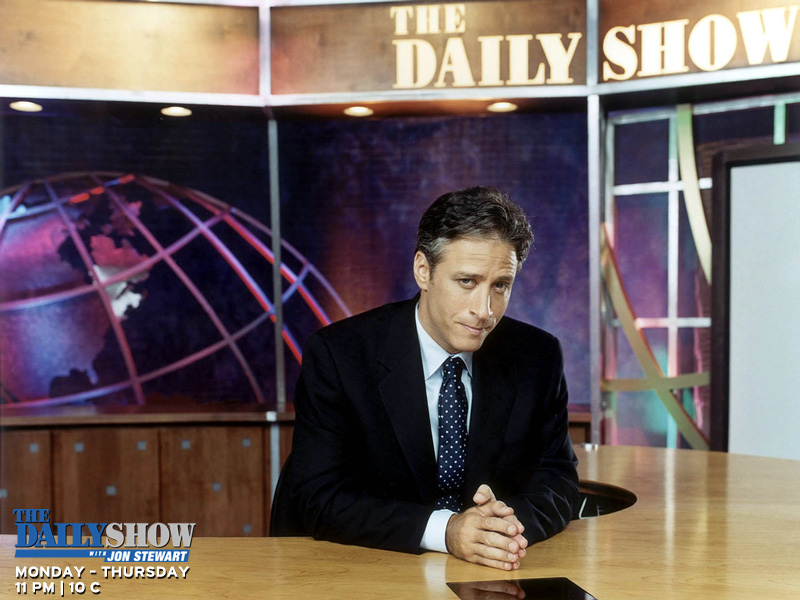
Goodbye to the Best Damn Anchor EVER!

Movies & Television & Theatre, Politics and other nonsense, satire

I think I would have been more upset about Jon’s last show, but I lost my Jareth kitten, so I’m numb to other tragedy today. That said . . .

THE SIMPSONS: Springfield voters reject the leading candidates and embraced a write-in: Ralph Wiggum.  Although no one knows for sure which political party Ralph is representing, he insists that everyone is invited to his party in the "E Pluribus Wiggum" episode of THE SIMPSONS Sunday, Jan. 6 (8:00-8:30 PM ET/PT) on FOX. (Pictured: guest voice Jon Stewart.  THE SIMPSONS ª and ©2008TCFFC ALL RIGHTS RESERVED.

THE SIMPSONS: Springfield voters reject the leading candidates and embraced a write-in: Ralph Wiggum. Although no one knows for sure which political party Ralph is representing, he insists that everyone is invited to his party in the “E Pluribus Wiggum” episode of THE SIMPSONS Sunday, Jan. 6 (8:00-8:30 PM ET/PT) on FOX. (Pictured: guest voice Jon Stewart. THE SIMPSONS ª and ©2008TCFFC ALL RIGHTS RESERVED.

I have seen almost every Daily Show with Jon Stewart. I started watching when Craig hosted, though due to cable issues I wasn’t as faithful to him. Over these past many years, I think there are maybe 8 episodes of TDS with Jon I haven’t seen, mostly due to overseas travel.

Jon brought something that Craig didn’t–a decidedly political focus. When I think of Craig’s show, I remember laughing, I remember his 5 questions bit, I remember Olivia Newton John not getting the 5 questions right although they just wanted her to say “grease,” and I remember Bill Murray singing some lyrics for the theme song. There’s more to remember about Jon because his show was more meaningful.

You all know what I’m going to say: More people got their news from Jon than from anywhere else. Their coverage won 7 Peabody Awards and an Orwell. The show launched the careers of some of our best comedians.

The last episode featured many, many correspondents (and his crew)–as it should. It was their show, too, and Jon made sure their voices were heard. Many have talked about how Jon made them better writers–that they learned to write for a purpose, for an audience, and with concision in mind–in addition to being funny.

Jon allowed them to play and to ridicule him. His brand of comedy was unique, in fact, because while the show was often satirical, the true satire was always in the hands of his correspondents. That is, satire plays on a level of meaning–it’s possible to misunderstand it. It depends on a naive narrator. Stephen Colbert’s show was all satire because Stephen was in character (and many did somehow miss that he was). While Jon sometimes used sarcasm for comic effect, he was sincere. He was angry at the VA, at those who fought to screw over first responders, etc. It wasn’t an act.

Those of us of a certain age will always remember Jon’s first show after 9/11 and the strength of his words.

When I teach satire, the segments of The Daily Show with Jon Stewart I use come from the correspondents, since they can’t come from the straight man that is Stewart (like this one).

Here’s what I’ll most miss. Jon’s honesty. His laugh. His using opponents’ words against them (by simply showing them saying the thing they said they didn’t say, etc.) The way he made the other side go crazy. If he were just a clown, they never would have had to mention him. But they did–they tried to take him down as if he were a serious newsman, as if he were a powerful political player.

And that made sure he was both.

(Maybe that’s why they decided to do their first debate after he was gone.) jon

Share
0 comments

Voting in America

Politics and other nonsense

Sometimes, when I ask my students a question like “which reading do you want to talk about first,” I get only one or two people responding. I often make a joke about democracy not working with so few votes.
The Supreme Court may grapple soon with efforts to make it harder to vote, to discourage voting. Striking down so much of the old Voting Rights Act has had some frightening consequences. In other words, deciding to trust states not to try to disenfranchise black voters has opened the door to the disenfranchisement of young, poor, and voters of color. Of course, the issue isn’t really about race anymore–if black people voted Republican, they wouldn’t be getting screwed now.
The new laws in various states controlled by Republicans are designed to ensure that Republicans can vote and that others may not be able to. Voter ID laws, getting rid of early voting, etc–these all target the urban, the poor, the young, the old, who may not have a picture ID or who may not be able to get to a polling place easily. One Texas law, which accepts a gun ID, but not a student ID, as proof of identity, could not be clearer in terms of who is encouraged to vote.
Those who support these laws say the laws are there to reduce voter fraud. When confronted with the less than 1% incidence of voter fraud, they will say that even one fraudulent ballot is worth all the trouble.
I don’t happen to share that view, because I’m offended by the idea of lots of people not being allowed to vote or having their ballots thrown out just in case there’s *an* invalid ballot.
I take this personally. When the Supreme Court stopped the absentee ballot count in the 2000 election, they stopped a count that included MY vote (I had just moved to California).
I can’t help but think of our already low voter turnout and why anyone actually interested in democracy (as opposed to oligarchy) would try to make it even lower. I think about other countries, where voting is required or where election day is a holiday or where people are automatically registered the second they become an adult. These countries don’t seem to have problems with voter fraud.
We need an updated Voting Rights Act, one that focuses not on race as the only thing officials might be taking into consideration–we need one that makes voting as popular and accessible and vibrant as it deserves to be.

Share
0 comments

Hobby Lobby: Controlling Your Neighbor as Yourself

Politics and other nonsense

I honestly didn’t think that The Supreme Court was going to go this way on the Hobby Lobby case. In what universe, after all, could my boss’s religion be imposed upon me? Why would we, who fear “the government being in our exam rooms with our doctors” allow our bosses to be there when we have our legs in the stirrups?

Nevermind that Hobby Lobby is inconsistent, allowing both male birth control and free viagra and investing in birth control products in their portfolios.

Nevermind that Hobby Lobby falls victim to the same logical fallacy that all anti-contraception/anti-abortion forces do: limiting access to birth control when access to birth control lowers abortion rates. These people hate, hate, hate abortion, but seem to hate–a) women’s access to baby-free sex, and b) logic–more.

Nevermind that, as many commentators have noted, this is only going through because the religion in question is Christianity. The Supreme Court previously denied applying the principle in question to Native American groups who wanted access to their traditional herbs in ceremonies. And, as Bill Maher noted, if this company were Muslim-owned, and they wanted the insurance plan to align with Sharia law . . .

Nevermind that the precedent set is dangerous in two ways. 1. The ruling opinion says that this is about what the employer “believes.” What if my boss believes that a woman’s body should be a temple in case she happens to get pregnant? After all,  many drugs could harm a fetus if they’re in a mother’s system. People shouldn’t conceive on depression medication or bipolar medication, after all. And, even if a woman doesn’t plan on getting pregnant, even if she’s on birth control, it can still happen. What if my employer believes even sillier things? What if he thinks my asthma medicine is an abortative? Since this is about his belief now, I guess my access to breathing is up to him.

2. This ruling can be applied widely–it’s not just about birth control. Some employers are already trying to get it to apply to their treatment of gay people, arguing that it’s against their religion to not discriminate. Decades ago, some employers argued that their religions allowed them to pay women less and to treat women differently. The Supreme Court told them no, but this newer religious freedom statute may allow it now. And, in terms of health care, some religions forbid blood transfusions, and some forbid any medication at all.

Let’s leave all that for now.

The upsetting aspect of this that isn’t being talked about enough is what the Hobby Lobby people and the majority decision said will be done about those women who do want birth control. You see, since it’s a horrible burden for Hobby Lobby to have birth control in its healthcare plan, the women or the government is supposed to figure out how to make sure women have access to a perfectly legal product that the United Nations and the WHO recognize as a basic human right.

Let’s say women should figure this out themselves. I know women who haven’t been on hormonal birth control due to its cost. (Insurance helps a lot.) An IUD can be hundreds of dollars. The pill, without any insurance, ranges from $37 to $162. Not all women, by the way, can just opt for the cheaper version. Our bodies are complicated–it often takes a long time to find the right pill. The wrong pill can cause BIG problems. And even if a woman can go with the cheaper version, sometimes $40 a month is a lot. When we think about the women who need this most–women of childbearing age on the margins–women who live (supporting themselves and often others) on or below (in the case of many undocumented women) the minimum wage–women who live on or below the poverty line–$40/month is sometimes not an option.

Let’s say the women can come up with the money. They buy and use the birth control. Where did that money come from? From their employer! Oh, no! Money from Hobby Lobby (HL) is going to birth control! It’s just instead of HL giving money to Kaiser and Kaiser giving access, HL gives the money to the woman, who gets her birth control . . .

Which brings up another problem. You see, when we receive health insurance from our employers, it’s not a gift. It’s part of our salary–part of our compensation package. We factor it in when deciding to take a job. (I moved to California because UCD, unlike schools in the South, offered healthcare to graduate student workers.) My paycheck includes information about my gross and net and also how much my organization puts into my healthcare. This month, for example, I paid $193 as my portion of insurance. UCD paid $1084.

Somewhere in all of that money is my birth control. Companies who refuse to allow birth control in their health care plans are thus not only denying women a basic human right & inserting their religion into the lives of their employees. They are also cheating their employees out of part of their pay. They are ignoring that these employees also pay into their insurance (and thus should be able to avail themselves of the whole plan). They are insuring that women who want to use birth control must pay the same amount for their insurance, but must also come up with $37-$162 (without, of course, any increase in pay to compensate for the loss in their payment package).

Unless, of course, the government subsidizes healthcare for these women, as HL and the court implied it might have to do. Now, where would that money come from? Taxes. Taxes on the woman who’s being cheated, taxes on me, who, as a “middle class” person, pays a very high tax rate. Taxes on corporations. Thus, HL would be paying for birth control again–just to the government instead of to the insurance company. Unless it, like many corporations, manages not to pay taxes.

And that’s another problem–a problem we as a country seem to be ignoring. Corporations keep shifting the burden of basic life expenses onto the rest of us.

Why, when a woman has access to insurance, should my taxes be required to grant her birth control?

Because corporations would rather I pay it. After all, we live in a world where many low-wage workers, many Walmart employees and fast food workers, have to also live on public assistance. They’re fighting a rise in the minimum wage, saying they can’t afford it.

My fellow taxpayers, they can afford it. We’re the ones who can’t. We’re the ones paying enormous taxes for “entitlements”–assistance to people who work, but who aren’t paid a living wage.

The Hobby Lobby decision is not just the furthering of the Christian-theocracy agenda in this country; it’s not just the start of a dangerous precedent; it’s the strenghtening of our corpocracy–of corporations shifting the basic burdens of payment onto everyone else.

And what do they say about this? One man I heard on NPR, who won’t be giving his female employees access to birth control, said that if the women didn’t like it, they could go work somewhere else.

Yup. And if she can’t find that job, maybe she can get some birth control through her welfare package. Problem solved.




Share
3 comments

A lack of empathy

Politics and other nonsense

Usually, I can understand why the other side is doing what it’s doing, even if I don’t agree.

I understand that pro-lifers put the life of a fetus above everything else, even above the fact that the outlawing of abortion has historically been correlated with higher rates of abortion. I don’t think most pro-lifers are evil (the ones who would murder for it are)–I just wish they would put their energy into assuring that women have access to good birth control and sex education and that the babies who are born are born with good health care etc., since I find it SO problematic when lifers are fine with letting babies, but not fetuses, die.

I get the fiscal libertarian view, which is: “this is my money, don’t touch it. You and your child can go die in that ditch, there, no–that’s my ditch–THAT ditch over there–the one off my property.” I do think it’s evil, but I get it.

I get why the Republican leadership are against Obamacare. It’s because they’re on the side of business. They want the insurance company to have the freedom to spend as much of their profit on their shareholders and paperwork as they want (Obama wants them to use it on patients). They want the insurance company to have the freedom to not insure me, to turn me down for procedures, to drop me when I get too expensive. They tell me they don’t want the government to get between me and my doctor–that’s the insurance company’s job!!! I get it.

But I don’t get the shut down.

The law passed.

We elected the guy. Twice.

When W got elected the second time (the first time, really), he said he had a mandate and that he was going to use it.

Republicans ignored the law and the mandate and sued, and the Supreme Court said sorry, and so here we are.

I’m trying to imagine applying this logic to my life. There’s A bill I don’t want to pay. So I don’t pay any of them. And I tell the people I owe money to that it’s what they want and that it’s for their own good. It’s for their freedom!

I think I’d get locked up. I would at least get sued and kicked out of my house and a bunch of my shit would stop working. Republicans are half complaining that national parks are closed and half crowing that only the national parks are closed (not true–lots of things are affected–but they haven’t decided on just one message here).

And I can’t get my head around it. When I hear people say we need to find a compromise with these people, I scream, “No, we don’t!” or “What compromise?”

And this is how America becomes divided.

Share
2 comments

Missouri leader inspires lawsuits

Politics and other nonsense, satire

Missouri Representative Paul Wieland made news this week by suing the federal government. Wieland’s state health insurance includes the option for birth control. Previously, he would have been able to opt out of having this option. In statements to the press, Wieland conflates birth control with abortion: “I see abortion-inducing drugs as intrinsically evil . . .” While his family could simply not ask for birth control, Wieland argues that it’s against his faith to even have the option in his insurance plan. His attorney says that the precedent Wieland is trying to set “will be of great value to other families.”

Indeed, other families are already lining up to file lawsuits arguing that having access to products or services that go against their religion is offensive. Many diners have noted that, while they are never forced to order food they aren’t allowed to eat, it’s wrong to have the option to do so in the first place.

A few conservative Jews are banding together to have “Red Lobster” banned from their neighborhoods, as Leviticus clearly states, “Whatsoever hath no fins nor scales in the waters, that shall be an abomination unto you.” “Red Lobster could still serve fish,” one customer argued. “But since I can’t eat lobster or shrimp, it shouldn’t be on the menu of options.”

Wieland, whose picture ironically deters birth-control necessitating activities.

Wieland, whose picture ironically deters birth-control necessitating activities.

Restaurants, bars, cafes, and grocery stores near heavy populations of Mormons are bracing for demands that alcohol and caffeinated drinks be pulled from stock since having these items for sale may offend Mormon customers, who aren’t allowed to partake.

Pork products will likely come under fire, as both Jews and Muslims are forbidden from eating them. One young man at a pizzeria said he was unlikely to sue, since lawyers “cost a lot,” but noted that it would be easier (“I mean, less offensive”) to resist the temptation of pepperoni (“which I’ve heard is the bomb!”) if it weren’t offered to him in the first place.

The servers unions in some states have already been dealing with similar issues for months, following health care providers, such as nurses and pharmacists, who want to be able to opt of out dispensing medications or giving prescribed care to their patients that they “don’t believe in.”

“Why should I be required to bring you pulled pork sliders,” asked one Hooters waitress in Houston, “when the Bible, like, forbids it and stuff. It’s not my job to bring you sinful meat, not when I don’t believe in eating it.”

Naturally, some of these cases might be dismissed since restaurant workers could opt out of working or since customers could opt out of eating out or grocery shopping. Rep. Wieland, after all, simply wants his health insurance coverage to refuse to cover a required, basic medication that 99% of American Catholics admit using due to his Catholic faith. He argues, cogently, that it’s better to not be covered at all or to not have this option for the women in his family rather than to simply not use the product, which would demonstrate his faith in a private way (as the Bible recommends) through personal prayer and private choices.

Equally problematic in terms of health insurance mandates, however, is the coverage of emergency blood transfusions. Jehovah’s Witnesses, following Wieland’s stance, want personal exemptions from such coverage in their insurance programs because of a line in the Bible that forbids ingesting blood. However, they’d like to do Wieland one better, demanding that hospitals they may be taken to in an emergency do not have supplies for such a procedure, as that would still give them the choice to have one.

Rep. Wieland’s lawsuit has prompted other families to consider a suit he will surely support. Some atheists families have noted, with evident distress, that American religious freedom guarantees that there are many churches, synagogues, mosques, temples, and other religious centers in every town in the U.S.

“You see,” one concerned mother from Nebraska explained, “the only tenant of our belief system is that we don’t believe in God and thus that we would never go to church. It’s offensive to have the choice to do so–guaranteed by the federal government. It violates everything my family does–and doesn’t–believe in. What if my children one day wander in to the Lutheran church down the street, just because they can? My aunt already has to attend her AA meetings at the Baptist church–why should she be confronted with the choice to accept the higher power who’s supposed to change the things that she can’t? The government can’t mandate that she have options that she doesn’t believe in.”

If the class-action suit filed by the Nebraska families succeeds, Rep. Wieland will surely be relieved. His religious choices will then be moot, as they will no longer be protected by the government, as the right to insurer-provided birth control is.


Share
1 comment

True Blood and PTSD

Movies & Television & Theatre, Politics and other nonsense, Words, words, words

[Warning: Spoilers follow. If you’ve not seen the August 2013 episodes of True Blood, you don’t want to read this.]

I’m grateful The Daily Show for its coverage of and attention to the ridiculous treatment of our returning veterans as they attempt to apply for benefits. When we think of these benefits, we usually think about medical coverage for physical injuries from combat. We think less about mental injuries from combat.

The term PTSD (or, as it will be called here, in honor of George Carlin, “shell shock”) has moved into our vernacular, and some tv shows featuring characters in the military (or other dangerous services) do address it. SVU had an episode recently called “PTSD”; characters on BSG, M.A.S.H., Breaking Bad, Downton Abbey, etc. have exhibited symptoms of the disorder.

There are some films (fiction and documentary) that address the issue as well.

However, most depictions of shell shock in the media do not address a common outcome–suicide.

2012 was a record year for military suicides. We lost more soldiers to PTSD than to combat. In fact, we’re losing them at a rate of one about every 18 hours.

The fact that we’re not talking about this made this week’s True Blood, featuring the funeral of one of the most beloved characters–and some of the revelations of his shell shock leading up to it–stand out.

I watch True Blood with a group of friends. We eat, drink, and laugh. In fact, we’ve started taking a drink each time a character says something that could only be said on this show (like “Who the fuck is Mary Poppins, and can I please kill her?”). It’s our Vampire Porn Soap Opera.

But this last episode, “Life Matters,” lingered on Terry’s life and his death in a poignant way. Characters die on this show all the time. So many, however, that we rarely get to morn them. And we haven’t had a beloved character die in a while. This mourning, though, wasn’t just because we’ll miss Terry. It was because we needed to grapple with what killed him.

It wasn’t a serial killer. It wasn’t a supernatural force–a were-whatever or a vampire or a vampire virus.

Terry chose to die. And he chose to do so because he couldn’t live with what the war had done to him and with the things he’d done.

And we’ll miss him.

When True Blood came out (and before that, when the book series came out, which I’ve read (and reviewed here), it was interesting because of its vampire characters’ analogy to the gay rights movement. It hasn’t really done anything moving or intriguing in a while.

Until now.

terry-bellefleur-1024


P.S. The book series recently came to its conclusion.

Here’s an update to my earlier post. One anonymous commentator on my post mentioned that she agreed with some of what I said. The books that have come out since my post have not repeated the problems I listed. Coincidence? Or did I unintentionally manage to give Harris some writing feedback? (I mean, I don’t get anonymous commentators. You all know me, which is why you read this. Unless you’re searching for reviews of your own work, which a few people who don’t know me have done on this site.)

Sookie makes her peace with her vampire lovers and ends up with the man she should have ended up with the whole time. Loose ends are wrapped up. The danger seems to have passed. A good end to a good series.


Share
0 comments

Ah, Texas

Politics and other nonsense

First, I’m going to admit that I don’t know much about Texas. I’ve only been in airports and airport hotels there. My step-father cheated on my mom with a hairdresser from there. I love The Best Little Whorehouse in Texas. I’ve heard children pledge allegiance to the nation’s flag and the Texas flag in the mornings. I’ve heard you aren’t supposed to mess with them and that things are bigger there.

I used to watch Dallas when I was a kid.

But I also know Texas Governor Rick Perry would like California businesses to move to his state. He has a series of ads across many states (see Lewis Black’s story about it here: http://www.thedailyshow.com/watch/wed-july-17-2013/back-in-black—new-york-versus-texas), all of which imply that his state is the best for business because of their lack of regulations.

There should be an asterisk. If your business is providing safe, legal abortions, then Texas is going to regulate the hell out of you. Due to new regulations signed just a couple of days ago, almost all of these businesses will have to close.

If you’re a woman who believes her body’s reproductive system is her business, you also want to stay out of Texas. The new bill restricts them after 20 weeks (if you can find a place to do them). The new push is to ban them after six weeks.

Most women aren’t even aware they’re pregnant by then.

Rick Perry hates regulation and loves freedom.

Apparently, everything is bigger in Texas, even hypocrisy.

Share
0 comments

What We Talk About When We Talk About Healthcare

Politics and other nonsense

My job during my frequent trips to London is to try to explain Americans and American policy to our former cousins.

When I was first there in 2006, I had to explain how it was that W had gotten a second term.

Now they want to know about healthcare. About how people can believe that it’s okay to let your fellow citizens die for lack of it. About how we would resist a single payer system when it would cost less and deliver more. About why we think everyone having health insurance (the way all car owners have car insurance) would somehow make us all commies.

I can’t always give answers. I don’t know why members of my own family believe that if you don’t have insurance, due to its expense or due to pre-existing conditions, you should just be allowed to die. But they do. One told me that it was a shame, but it wasn’t his responsibility to keep anyone else alive–staying alive is a personal responsibility, you see.

It was Christmas, and we were told to stop arguing, so I didn’t say that other people’s tax dollars pay for his children’s school, blah, blah, blah.

I can’t explain these positions because I can’t even begin to follow the logic. My mother is furious right now because her sister is ill. Due to pre-existing conditions, my aunt has not had health insurance in decades. No primary care physician in their area will take her. No specialist will see her. Rather than looking forward to January, when the pre-existing condition problem won’t be a problem, or when Florida finally allows its healthcare program for the poor to be expanded, my mother’s response to this situation is to say:

“This is how it’s going to be for everyone when Obamacare kicks in.”

When asked to explain, she says she doesn’t “believe” that my aunt would be able to get health insurance under the new regulations. Instead, she believes that the new rules will mean that because my aunt doesn’t have insurance, the IRS will take away her house.

No, I can’t explain that to people, who, even though they don’t live here, understand Obamacare better than that.

(By the way, I’m not entirely happy with Obamacare. I would rather have a single-payer option. But I think the changes under Obamacare are better than what my family’s political party wanted to do–to blame my aunt and people like her for not having insurance and to watch while she suffers.)

What I can do is explain that many Americans have myths about the British healthcare system. That people believe Brits have to wait forever for care, that they can’t choose their doctors, that the quality of their care is low, that the government makes their health care decisions, and that they don’t like their own system.

These myths surprise my British friends.

The other thing I can do is challenge the myths they have about our system. Most of these myths are about what life is like for those of us with insurance.

Surely, they think, if my company and I are going to pay WAY more for my healthcare than it costs in tax dollars in the British system, I must have it good.

Then I explain some things:

1. My insurance company makes a lot of my health care decisions. These decision come in the form of them telling me that I’m not allowed to have something the doctor wants me to have. Yes, while the other side is terrified of the government deciding which asthma medicine I can be on, they are fine with a company making that choice–a company who bases that choice on their own profit.

2. I have to wait for care. Every time I need to see a specialist, it takes months. Once, when my son really needed to see an ENT doctor, my GP had to mark “urgent” on the referral to guarantee that he would be seen within two months. Insurance doesn’t guarantee prompt care.

3. Although I have insurance, I could still easily go broke due to medical costs. In 2001, I had insurance. I also had a significant health issue that ended in surgery (although the surgery didn’t completely resolve the issue). I spent over 1/3 of my gross income that year on healthcare. As I was a single mother making less than 20,000, it should come as no surprise that I am still dealing with medical debt from way back then.

In May, I was in an emergency room. A doctor came in and said I needed surgery and that he was going to call an ambulance to transfer me to a hospital that could do it. I am now supposed to pay over $800 for an ambulance that a doctor called for me.

This blows my mind. It blows the minds of the Brits.

After I explain how our system works, our cousins don’t envy us. And they don’t just feel sorry for Americans without insurance. They feel sorry for Americans with it too.

Share
0 comments

Now that something bad happened to Rick Scott’s mother, he’ll be nicer to yours.

Politics and other nonsense

In January, I heard a story about Florida Governor Rick Scott’s efforts to oppose the expansion of Medicaid in his state: http://m.npr.org/news/U.S./169060335.

The story was frustrating for several reasons. I have many relatives in Florida without health insurance. They don’t have very much money and thus would likely be eligible to benefit from this expansion. When I lived in Florida as an adult, I was also unable to get health insurance, as I was turned down due to pre-existing conditions. I worked full time for years without coverage. I got two undergraduate degrees and a masters without insurance. I worked for Florida State University both full-time before grad school and as a graduate student, with no health insurance.

It sucked. The inability to have a regular doctor guaranteed trips to the emergency room, the inability to effectively manage my conditions (including my asthma, which left me vulnerable and close to death quite a few times), and a reliance on samples of medication given to me by sympathetic poor-people-clinic doctors who applied the free drugs like bandaids to a gunshot wound.

In fact, one of the reasons I moved to California was because my university offered me healthcare, and I needed it. I couldn’t breathe, due to allergies and severe asthma. I missed too much work when my lungs closed. I had migraines. I was also starting to have trouble walking and immense back pain–at age 24. It was only when I was in California that I was able to be put on medications that control my asthma–I haven’t had to sleep with my rescue inhaler in my hand like I used to in The Sunshine State. It was only when I came here that I was able to get the tests to show that I had a severely herniated disc and that I needed surgery immediately. Obviously, finding out I needed surgery would have been pointless in Florida–I wouldn’t have been able to afford it (not that it was completely affordable here–I spent 1/3rd of my gross income that year on medical expenses and am still paying down debt from back then). My back pain would have increased–I would have likely ended up on disability, after going bankrupt trying to figure out what was wrong first.

Governor Scott was arguing that even though the federal government covers 100% of the costs of the Medicaid expansion for the first three years and 90% after that, that it was too expensive for Florida to help the poorest Floridians in this way. Independent agencies argued with his numbers, noting that he was ignoring important factors, like how expensive it is for taxpayers when people like me end up in the ER. His Congress told him his numbers were wrong.

After fighting and fighting and fighting, he revised his numbers to about 10th his original net cost estimate.

Yesterday, he did a full reversal and has committed to allowing the federal government help those in need in his state for at least three years: http://www.npr.org/blogs/health/2013/02/20/172523730/in-reversal-florida-gov-rick-scott-agrees-to-medicaid-expansion :

“‘Quality health care services must be accessible and affordable for all — not just those in certain ZIP codes or tax brackets,’ he said at the briefing. ‘No mother, or father, should despair over whether or not they can afford — or access — the health care their child needs. While the federal government is committed to paying 100 percent of the cost of new people in Medicaid, I cannot, in good conscience, deny the uninsured access to care.'”

He also said that the death of his mother helped put things into perspective.

Governor Scott was not governor when I was in Florida. I’m glad he’s been able to use tragedy positively–to allow himself to gain empathy and clarity.

I just wish politicians like Scott were touched by the rest of us, instead of just by what seems to affect their own families.

When I was struggling in Florida, I was someone’s mother. Although it may have given my son a lesson in basic universal rights and strengthened his ability to empathize, it would have been terrible for him to lose me to a preventable asthma attack or the pneumonia that almost took me away from him. He already had to deal with a mommy who said, “I’m sorry; I can’t pick you up, baby.” You see, even though he was still light as a young elementary student, there was no way the mystery pain in my back would allow me to play with him with the way I wanted to.

Governor Scott, the citizens this Medicaid program will help are my mother, my aunts and uncles, my cousins. They were always special to me. I was always special to them. We have always deserved to have access to the healthcare that could keep us alive, working, and supporting each other.

I’m glad you might finally see that.

Share
0 comments