Goodbye, Mrs. Krabappel

Movies & Television & Theatre, Teaching

This week, Marcia Wallace, the voice of Mrs. Krabappel, died, just a few days short of her 71st birthday.Marcia_Wallace
Edna Krabappel will not be replaced. She’ll join Lionel Hutz and other voices who have been silenced in similar ways.
Wallace was a wonderful actress and comedian. I think I first became really aware of her work with Bob Newhart, but of course I will remember her as Edna.
There’s something about our elementary school teachers, the good and the bad. They stay with us, in our dreams, our imaginations. They spend more waking time with us than our parents often do at that age. They are experts in all subjects (or at least seem so). They are more patient than I will ever be. They read whole books to us, chapter by chapter, day by day. They figure us out, push us towards new things (at least the good ones do.)
My favorite things about Edna:
1. Her willingness to believe in the love of a certain Woodrow, who couldn’t tell her why he couldn’t be with her, where he was going, or even how he was going to get there.
2. The fact that she has bad days sometimes and she doesn’t beat herself up about it.
3. The fact that she is, in fact, an excellent teacher, as evidenced by her Teacher of the Year award.
4. When Principal Skinner abuses her heart, not only does she refuse to take him back, but she also is wise enough to reject her rebound guy just in the nick of time.
5. On occasion, she has stood up to the administration.
6. After she marries Ned, she also asserts her right to co-parent (and perhaps will help the boys turn out a little less sheltered and helpless).
7. When Ned almost didn’t marry her, because of her “promiscuous” past, it was upsetting. Equally upsetting, though, was when he decided to “forgive” her for having had a sex life before him. Luckily, Edna refuses to accept this and demands that accept her –and love her– for who she is.
8. Through everything–getting her fired, faking serious illnesses, replacing her birth control with tic tacs–Edna has only hit Bart once.
9. Yet he’s kissed her once, when she acknowledged his applied learning.
10. Edna will be remembered for her laugh and, most of all, the way in which her relationship with Bart so defined them both.

Share
0 comments

A lack of empathy

Politics and other nonsense

Usually, I can understand why the other side is doing what it’s doing, even if I don’t agree.

I understand that pro-lifers put the life of a fetus above everything else, even above the fact that the outlawing of abortion has historically been correlated with higher rates of abortion. I don’t think most pro-lifers are evil (the ones who would murder for it are)–I just wish they would put their energy into assuring that women have access to good birth control and sex education and that the babies who are born are born with good health care etc., since I find it SO problematic when lifers are fine with letting babies, but not fetuses, die.

I get the fiscal libertarian view, which is: “this is my money, don’t touch it. You and your child can go die in that ditch, there, no–that’s my ditch–THAT ditch over there–the one off my property.” I do think it’s evil, but I get it.

I get why the Republican leadership are against Obamacare. It’s because they’re on the side of business. They want the insurance company to have the freedom to spend as much of their profit on their shareholders and paperwork as they want (Obama wants them to use it on patients). They want the insurance company to have the freedom to not insure me, to turn me down for procedures, to drop me when I get too expensive. They tell me they don’t want the government to get between me and my doctor–that’s the insurance company’s job!!! I get it.

But I don’t get the shut down.

The law passed.

We elected the guy. Twice.

When W got elected the second time (the first time, really), he said he had a mandate and that he was going to use it.

Republicans ignored the law and the mandate and sued, and the Supreme Court said sorry, and so here we are.

I’m trying to imagine applying this logic to my life. There’s A bill I don’t want to pay. So I don’t pay any of them. And I tell the people I owe money to that it’s what they want and that it’s for their own good. It’s for their freedom!

I think I’d get locked up. I would at least get sued and kicked out of my house and a bunch of my shit would stop working. Republicans are half complaining that national parks are closed and half crowing that only the national parks are closed (not true–lots of things are affected–but they haven’t decided on just one message here).

And I can’t get my head around it. When I hear people say we need to find a compromise with these people, I scream, “No, we don’t!” or “What compromise?”

And this is how America becomes divided.

Share
2 comments

2013 End of Summer Wrap Up

Misc–karmic mistakes?

It’s easy to get discouraged these days.

I’ve had a bad headache for almost two months now.* It’s exhausting. Eula Biss, in her essay, “The Pain Scale,” argues that one of the worst limitations of how we measure pain is that we don’t have a metric for how long it lasts. I’ve gone through the summer without a break, and I’ve been sort of beating myself up because I don’t have any more money than I started with and a lot of “to do” list things didn’t get done. And my oven broke about an hour ago. Flames shot out of it.

Thus, I have had to give myself little lectures on what got done this summer. They help.

WHAT GOT DONE THIS SUMMER:

I taught four classes (successfully).

We judged the Prized Writing submissions, then I edited the publication, and now it’s out.

I prepped my five Fall classes.

I served on two Campus Book Project committees.

I paid the “pay off the credit card in three years instead of a billion” amount.

I was given a new crock pot, and I tried out a bunch of new recipes.

I got two new kitties.

I fixed one expensive thing on my car and two on the boy’s.

I went to London to be in the wedding of two people I love dearly.

I spent quality time with my son, my friends, my man.

I’ve done a lot to try to make this headache go away–switching drugs (including going off the one that caused hallucinations), massage, chiropractic, physical therapy, lots of doctors’ appointments.

I went to Ashland with Vanessa and Kevin, where we had good food, good drinks, and saw five amazing plays in three days (The Heart of Robin Hood, A Midsummer Night’s Dream, Cymbeline, The Tenth Muse, and King Lear).

My fractured tailbone healed.

I kept the house reasonably clean.

In addition to the plays I’ve already written about in past blogs, I saw Patrick Stewart and Ian McKellen and Billy Crudup in No Man’s Land (not my favorite play, but it didn’t matter!).

I chose essays for an edited book proposal I’m about to send off.


There, now I feel better. Time for more painkillers.


*For those who don’t know, I have a low grade headache every day. This has been the case since I was 12. It’s always there. All of my treatments over the years are to minimize the days it’s bad–the days it’s debilitating–the days I identify which muscle groups I would like to inject with some miracle that would make them release–the days I fantasize about guillotines. It’s been almost two months now of those days.

Share
0 comments

The end of Futurama??? Bite my shiny metal ass!

Movies & Television & Theatre

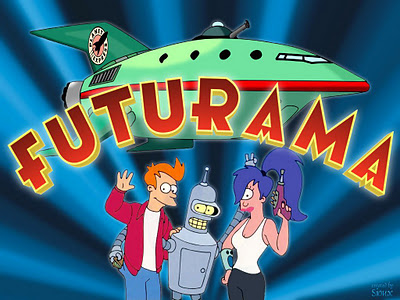
Tomorrow marks the second ending of Futurama. I’m going to miss it. futurama_8

The show originally aired on Fox from 1999-2003. It was revived by Comedy Central in 2008. While the original Fox shows were good (with perhaps the exceptions of the film-length works), the Comedy Central version has been really good, producing some wonderful episodes with biting satire.

Futurama is the brainchild of Matt Groening, creator of The Simpsons. When The Simpsons aired, Groening’s team had creative control (i.e. the show didn’t receive ‘notes’). Groening fought hard to maintain that policy with Futurama. Those of us who love the show are grateful–Fox would have taken out a lot of the darker elements that make the show what it is.

The title comes from an exhibit at the 1939 World’s Fair that imagined what the world would look like in 1959. Futurama shows us the years right after the start of the fourth millennium–the year 3000. It’s the show’s inherent science fiction that both turns off some anti sci-fi people and attracts the rest of us. It also allows the writers to play with reality for the sake of humor and social commentary. When else but in the year 3000 could Richard Nixon’s head be president? Could an evil “mom” figure rule the world through the eyePhone? Could a robot steward remind his airline passengers, “In the event of a wormhole causing us to travel back in time, do not kill your parents. If you are traveling with a small child, help them to not kill you before you don’t kill your parents.”

google glass-1

Well, you could maybe have those things in a Simpsons Halloween episode, but the whole joy of Futurama is that you can have the horror and comedy of sci-fi without having to wait for October (or, when stupid sports are ruining my life, November).

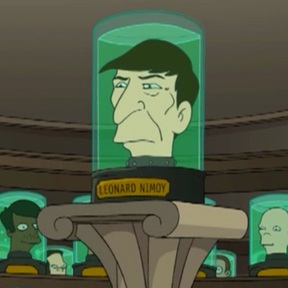
I still prefer The Simpsons to Futurama. And while Futurama is critically acclaimed, it seems the fans continue to support the family comedy that changed television over its sci-fi little brother. However, I don’t claim that The Simpsons is superior in writing, satire, or animation. Or that family comedies are inherently better than workplace comedies. Rather, my loyalty to The Simpsons is partially caused by it coming into my life when I was so young. leonard-nimoy_288x288

Also, I have never really liked Fry. And it’s hard to really, really love a show when you don’t love its main character. Although Bart and Homer both have problematic personalities, deep down, I like them. However, Fry could go back into a freeze pod, and I wouldn’t miss him. I would miss lots of the other characters–Leela, Kif, Zap (whom I wish we could have heard voiced by Phil Hartman, as was intended [miss you, Phil]), Morbo, and the Robot Devil, a diabolically good singer, etc.

Now they’re all leaving. Luckily, Netflix is streaming them, so you can binge watch, as I’ve been doing this week. Find yourself in future when suicide booths are luckily not well constructed, when Christmas has finally become X-Mas, when those who have difficulty with lessons in love can have a very sexy learning disability (sexlexia), when we finally discover why cats are so adorable,* when Al Gore can explain the true role of the V.P.:
Fry: “Who are you people?”
Al Gore: “I’m Al Gore. And these are my vice presidential action rangers, a group of top-nerds whose sole duty is to prevent disruptions in the space-time continuum.”
Fry: “I thought your sole duty was to cast the tie-breaking vote in the Senate.”
Al Gore: “That, and protect the space-time continuum. Read the Constitution!”

Futurama will remain one of the few shows to come back after a cancellation (the other two notable shows are Family Guy and Arrested Development). It’s fitting, really, that this show (in which the main character didn’t quite succeed in his world and gets another chance in the future) came back from the dead to succeed again. As we say goodbye tomorrow, we’ll cross our fingers that the space-time continuum will allow another rebirth. Until then, let’s eat that pizza the I.C. Wiener ordered.

I would so watch the evening news if Morbo were the anchor!

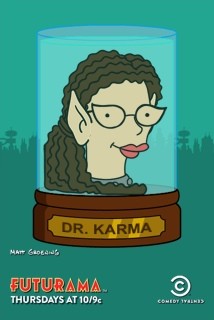
* The cats are adorable because they have an ulterior motive. Josh Weinstein, who wrote this episode, is also adorable, but it’s hard to believe he has an ulterior motive (which is probably exactly what he wants me to think). FuturamaHeadInAJar.jpeg

Share
0 comments

MaddAddam: A Review

Words, words, words

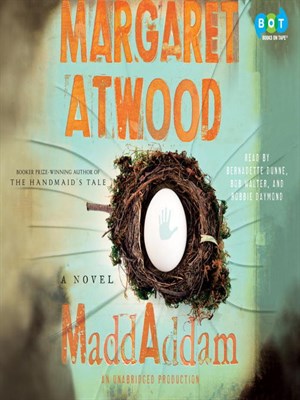
This Tuesday, September 3rd, will see the release of the third and final installment of Margaret Atwood’s MaddAddam TrilogyMaddAddam.

Although I read the book several months ago, I decided to wait to review it until more of you could get your hands on it, so as not to make you hate me (more) for getting it early. Where did this great gift come from, by the way? Let’s just say I have a friend at the bookstore.

maddaddamI was able to read the book in almost one setting, as I got hold of it when I was recuperating from my surgery in May. It was absolutely the best thing about being laid up.

The MaddAddam triology is a dystopic fiction of a post-apocalyptic world in which a very smart young man has unleashed a virus that has killed almost all of the world’s human population. This smart young man designed another race to take our place–yet they’re vulnerable to the few remaining humans.

Atwood’s vision demonstrates her unique ability to see trends before the rest of us do. She wrote about body image before it was popular to do so, about girl on girl crime before Mean Girls, about the oncoming debt crisis before it hit. The technologies and trends in the trilogy are all based on things that are in development, have been developed, or are logical extensions of things in development. Some of these things are scientific, some are religious, some are ecological, etc.

I’m going to try not to spoil anything in this short review of the end. The most important thing to know is that it’s a good read. Fast, solid, funny, and touching all at once.

Most of the book comes from Toby’s point of view (whom we know from the previous book). We learn more about Zeb’s past and about Adam through her storytelling to the Crakers. In this fashion, some blanks are filled in. And the story does end–you get a sense of how the lives of our characters will end and how life will go on from where we are.

However, not every hole is filled in. While we get a few more fragments of Crake–a few more sightings–we end the series without ever going into his non-neurotypical head. Thus, we still have to put together the pieces of why he did what he did from the pieces Atwood gives us. Did he ever love Oryx? Was that Oryx? Why did he kill her? What did she know? Did she enjoy Jimmy’s company or was she sent to him as a distraction?

I have my own ideas about these questions–as I’m sure you do.

And that’s why I’ll enjoy re-reading these texts from years to come. I have a whole story–but not the WHOLE story. And I’m fine with that. (If I weren’t, I couldn’t be an Atwood reader and scholar.)

Every time I read any of Atwood’s texts, I see new things. (Each time I read Alias Grace, I change my mind about whether she’s guilty or not.)

Her books keep me guessing, keep me working, but they don’t disappoint–I don’t feel like I’m missing any thing just because some viewpoints are incomplete–indeed, that’s what makes her writing so intriguing and so realistic.

A final note. Oryx and Crake focused on the science and the powerful. The Year of the Flood focused on the faith and the powerless. MaddAddam focuses on a world beyond science and faith and their ethical quandries* and on pragmatism and survival. This survival is all about storytelling, which is how knowledge will be passed on, how the Crakers will understand their place in the world, and how future generations will understand their human and Craker progenitors.


*It is not, however, a world of superscience and sorcery, which is what you’re supposed to get after an apocalypse, as I learned from watching Thundar the Barbarian (which, by the way, claimed that the end of the world came in 1994).

Share
0 comments

Missouri leader inspires lawsuits

Politics and other nonsense, satire

Missouri Representative Paul Wieland made news this week by suing the federal government. Wieland’s state health insurance includes the option for birth control. Previously, he would have been able to opt out of having this option. In statements to the press, Wieland conflates birth control with abortion: “I see abortion-inducing drugs as intrinsically evil . . .” While his family could simply not ask for birth control, Wieland argues that it’s against his faith to even have the option in his insurance plan. His attorney says that the precedent Wieland is trying to set “will be of great value to other families.”

Indeed, other families are already lining up to file lawsuits arguing that having access to products or services that go against their religion is offensive. Many diners have noted that, while they are never forced to order food they aren’t allowed to eat, it’s wrong to have the option to do so in the first place.

A few conservative Jews are banding together to have “Red Lobster” banned from their neighborhoods, as Leviticus clearly states, “Whatsoever hath no fins nor scales in the waters, that shall be an abomination unto you.” “Red Lobster could still serve fish,” one customer argued. “But since I can’t eat lobster or shrimp, it shouldn’t be on the menu of options.”
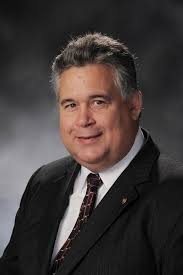
Wieland, whose picture ironically deters birth-control necessitating activities.

Wieland, whose picture ironically deters birth-control necessitating activities.

Restaurants, bars, cafes, and grocery stores near heavy populations of Mormons are bracing for demands that alcohol and caffeinated drinks be pulled from stock since having these items for sale may offend Mormon customers, who aren’t allowed to partake.

Pork products will likely come under fire, as both Jews and Muslims are forbidden from eating them. One young man at a pizzeria said he was unlikely to sue, since lawyers “cost a lot,” but noted that it would be easier (“I mean, less offensive”) to resist the temptation of pepperoni (“which I’ve heard is the bomb!”) if it weren’t offered to him in the first place.

The servers unions in some states have already been dealing with similar issues for months, following health care providers, such as nurses and pharmacists, who want to be able to opt of out dispensing medications or giving prescribed care to their patients that they “don’t believe in.”

“Why should I be required to bring you pulled pork sliders,” asked one Hooters waitress in Houston, “when the Bible, like, forbids it and stuff. It’s not my job to bring you sinful meat, not when I don’t believe in eating it.”

Naturally, some of these cases might be dismissed since restaurant workers could opt out of working or since customers could opt out of eating out or grocery shopping. Rep. Wieland, after all, simply wants his health insurance coverage to refuse to cover a required, basic medication that 99% of American Catholics admit using due to his Catholic faith. He argues, cogently, that it’s better to not be covered at all or to not have this option for the women in his family rather than to simply not use the product, which would demonstrate his faith in a private way (as the Bible recommends) through personal prayer and private choices.

Equally problematic in terms of health insurance mandates, however, is the coverage of emergency blood transfusions. Jehovah’s Witnesses, following Wieland’s stance, want personal exemptions from such coverage in their insurance programs because of a line in the Bible that forbids ingesting blood. However, they’d like to do Wieland one better, demanding that hospitals they may be taken to in an emergency do not have supplies for such a procedure, as that would still give them the choice to have one.

Rep. Wieland’s lawsuit has prompted other families to consider a suit he will surely support. Some atheists families have noted, with evident distress, that American religious freedom guarantees that there are many churches, synagogues, mosques, temples, and other religious centers in every town in the U.S.

“You see,” one concerned mother from Nebraska explained, “the only tenant of our belief system is that we don’t believe in God and thus that we would never go to church. It’s offensive to have the choice to do so–guaranteed by the federal government. It violates everything my family does–and doesn’t–believe in. What if my children one day wander in to the Lutheran church down the street, just because they can? My aunt already has to attend her AA meetings at the Baptist church–why should she be confronted with the choice to accept the higher power who’s supposed to change the things that she can’t? The government can’t mandate that she have options that she doesn’t believe in.”

If the class-action suit filed by the Nebraska families succeeds, Rep. Wieland will surely be relieved. His religious choices will then be moot, as they will no longer be protected by the government, as the right to insurer-provided birth control is.


 

Share
1 comment

True Blood and PTSD

Movies & Television & Theatre, Politics and other nonsense, Words, words, words

[Warning: Spoilers follow. If you’ve not seen the August 2013 episodes of True Blood, you don’t want to read this.]

I’m grateful The Daily Show for its coverage of and attention to the ridiculous treatment of our returning veterans as they attempt to apply for benefits. When we think of these benefits, we usually think about medical coverage for physical injuries from combat. We think less about mental injuries from combat.

The term PTSD (or, as it will be called here, in honor of George Carlin, “shell shock”) has moved into our vernacular, and some tv shows featuring characters in the military (or other dangerous services) do address it. SVU had an episode recently called “PTSD”; characters on BSG, M.A.S.H., Breaking Bad, Downton Abbey, etc. have exhibited symptoms of the disorder.

There are some films (fiction and documentary) that address the issue as well.

However, most depictions of shell shock in the media do not address a common outcome–suicide.

2012 was a record year for military suicides. We lost more soldiers to PTSD than to combat. In fact, we’re losing them at a rate of one about every 18 hours.

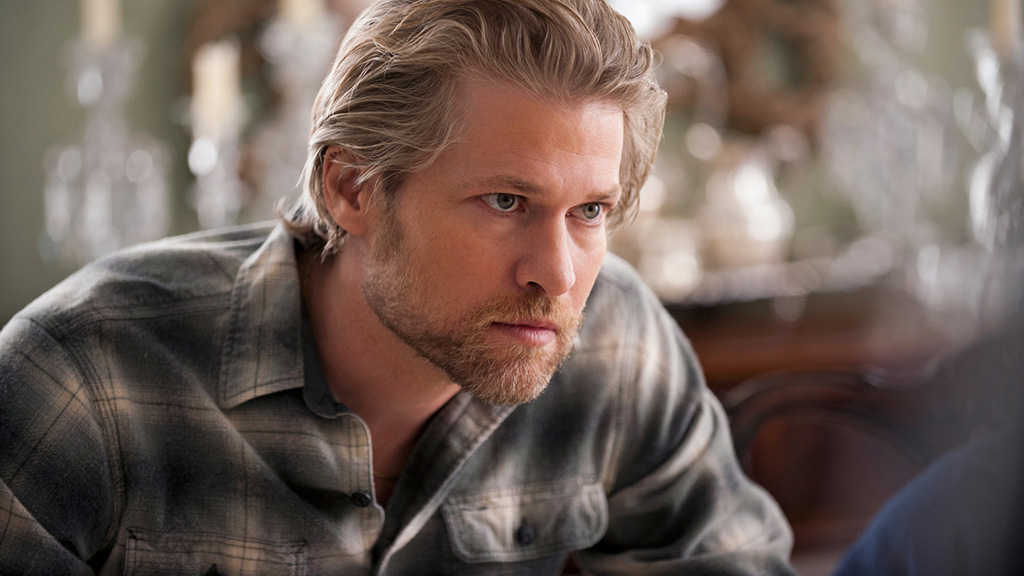
The fact that we’re not talking about this made this week’s True Blood, featuring the funeral of one of the most beloved characters–and some of the revelations of his shell shock leading up to it–stand out.

I watch True Blood with a group of friends. We eat, drink, and laugh. In fact, we’ve started taking a drink each time a character says something that could only be said on this show (like “Who the fuck is Mary Poppins, and can I please kill her?”). It’s our Vampire Porn Soap Opera.

But this last episode, “Life Matters,” lingered on Terry’s life and his death in a poignant way. Characters die on this show all the time. So many, however, that we rarely get to morn them. And we haven’t had a beloved character die in a while. This mourning, though, wasn’t just because we’ll miss Terry. It was because we needed to grapple with what killed him.

It wasn’t a serial killer. It wasn’t a supernatural force–a were-whatever or a vampire or a vampire virus.

Terry chose to die. And he chose to do so because he couldn’t live with what the war had done to him and with the things he’d done.

And we’ll miss him.

When True Blood came out (and before that, when the book series came out, which I’ve read (and reviewed here), it was interesting because of its vampire characters’ analogy to the gay rights movement. It hasn’t really done anything moving or intriguing in a while.

Until now.

terry-bellefleur-1024


P.S. The book series recently came to its conclusion.

Here’s an update to my earlier post. One anonymous commentator on my post mentioned that she agreed with some of what I said. The books that have come out since my post have not repeated the problems I listed. Coincidence? Or did I unintentionally manage to give Harris some writing feedback? (I mean, I don’t get anonymous commentators. You all know me, which is why you read this. Unless you’re searching for reviews of your own work, which a few people who don’t know me have done on this site.)

Sookie makes her peace with her vampire lovers and ends up with the man she should have ended up with the whole time. Loose ends are wrapped up. The danger seems to have passed. A good end to a good series.


Share
0 comments

Recent Plays

Movies & Television & Theatre

Okay, recent maybe isn’t the best word. But I’ve seen some good stuff over the past few months.

A.C.T. (The American Conservatory Theater) imported The National Theatre of Scotland (whom I got to see at Mondavi earlier this year) to perform Black Watch. The Black Watch is a famous Scottish regiment (formed in 1725, first comprised of Highlanders). This play not only gives us a bit of their illustrious history, but also details their controversial tour in Iraq as part of Bush’s coalition. The play was heartbreaking and beautiful and possibly the best thing I’ve seen at A.C.T.

Two weeks ago, I saw a very abbreviated Hamlet at the Francis Ford Coppola winery. Justin Ashforth adapted, directed, and starred. And I think that was a problem. It’s a bad idea to be that close to a production, to not have the distance to see when other actors are messing up (by simply being flat, as one was) or when you’ve cut too much/not enough (e.g. why have other characters talking about Hamlet going mad when you cut out Hamlet acting mad?).

I’ve been able to see two shows by Common House productions this summer. Common House is a relatively new company in Davis. Their repertory shows this summer (out on the Wyatt Deck) were The Importance of Being Earnest and Love’s Labour’s Lost. Earnest has long been one of my favorite plays (I even taught it once, years ago). LLL isn’t one of the great ones (in terms of Shakespeare’s other works), but this production brought out the what comedy and cleverness there is in the text.

Othello: The Remix at The Globe

Othello: The Remix at The Globe

When I was in Chicago in May, Denise and I hit the Chicago Shakespeare scene, which featured an AMAZING adaptation of Othello. Othello‘s always hard to watch, but this show was a joy. Othello: The Remix is a modern adaptation of the show, done by only four actors and a D.J. The show is completely sung in hip-hop style and is about hip-hop artists (Desdemona, whom we never see, is a diva). A few of the audience members took a while to warm up to the concept, but Du and I had our hands up in the air from the very first (and got a smile from one of the writer/performers).

Not only was the show wonderfully sad and funny and old and new (complete with geek references from both renaissance and 21st century pop culture), but it was actually really close to how a Shakespeare play would have been to its audience–men playing all the roles, minimal props and sets, a focus on the sounds (audiences are called audiences because they went to “hear” a play).

Also, it was fun because one of the actors, Jackson Doran, looks a lot like our friend Ben, so we kept imagining him doing all the numbers.

In London, I got to see a few shows:

Children of the Sun at the National. I didn’t know anything about this show going in, but I’ve never seen anything bad at the National. Andrew Upton revised Gorky’s play. It’s still very . . . Russian. There’s a lot of tea, of depression, of thwarted love, of class boundaries and barriers, of servants with their ears (and hands) at the door. It ends with the rich destroyed due to what one of them did. It ends, literally, with fire. I was in the front row and I could feel the heat. (And it was surprising–London is very paranoid about fire, especially in theatres).

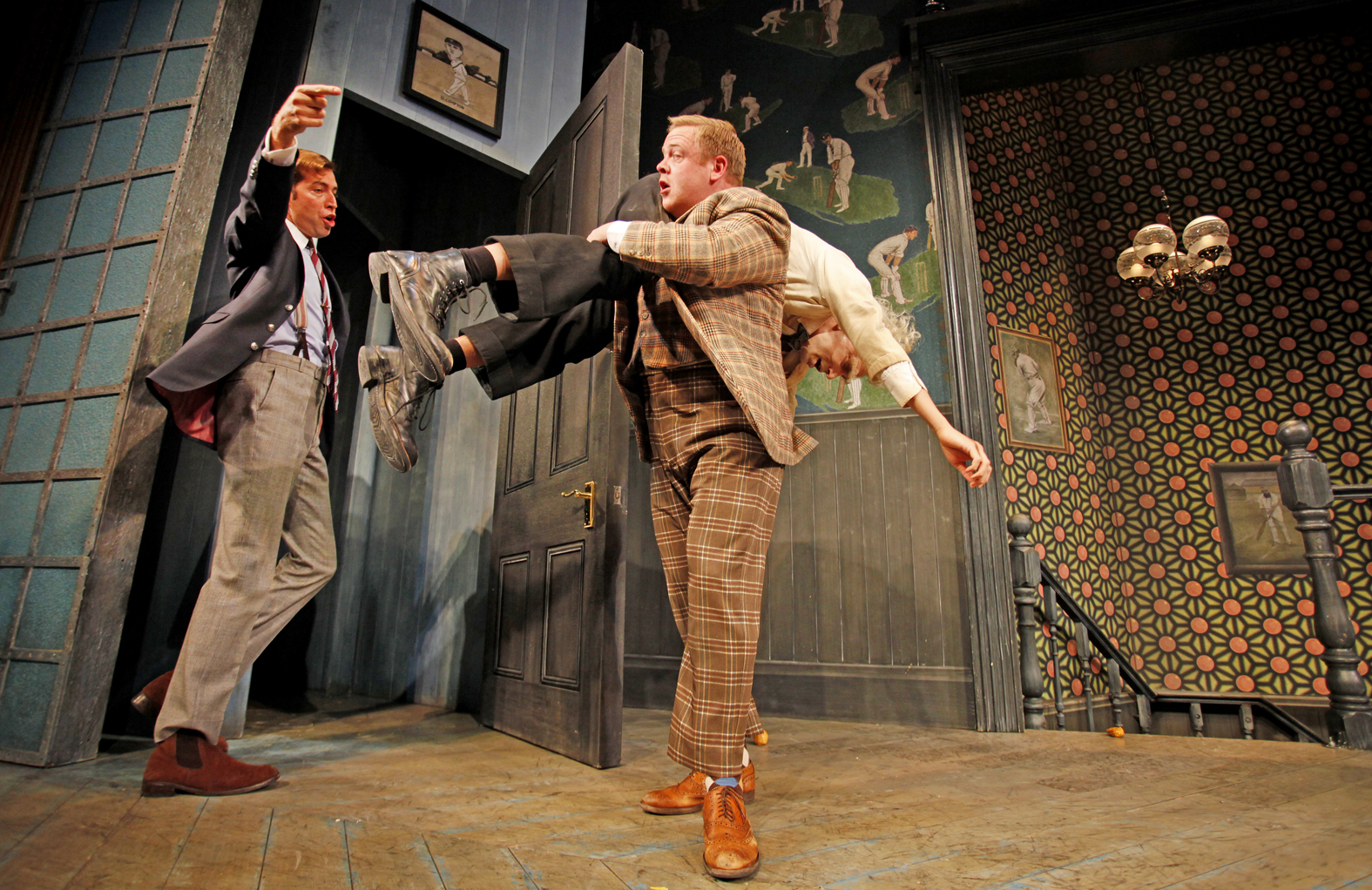
One Man, Two Guvnors is also an adaptation. The Commedia dell’arte play, A Servant of Two Masters, has been updated by Richard Bean. It was everything it was supposed to be–funny and farcical, with a little bit of audience participation thrown in. My one complaint is that the end of the first half is so good, that the rest of the show is anticlimactic.

One Man, Two Guvnors

One Man, Two Guvnors

The Taming of the Shrew at The Globe. Taming is another problematic play. This was my fourth time seeing it. Long ago, in Tallahassee, and a couple of years ago, at Cal Shakes, I saw “modern” adaptations in which Petruchio rode motorcycles. My favorite rendition was in Regent’s Park in London 2006. The actor playing Petruchio was older than we expected, but he was amazingly charismatic and genuinely seemed to be taken with his Kate. I saw that with my friend John Boe. Seven years later, we sat down for this all-female production. The women did a great job (especially since there were only eight of them). However, the end was a downer. Petruchio does indeed break (tame) Kate. And she remains broken. His face falls when he realizes this won’t make for a happy or lustful union. It’s probably more realistic than other versions, but I want my smart Petruchio–the one who loves her all along–despite herself–back.


Share
0 comments

It’s August (I survived June and July)

Misc–karmic mistakes?

Summer classes are crazy. My students sign up, thinking that the classes they’ve feared the most will somehow be easier in a shorter amount of time. And then I explain that we have to do the same amount of work in six weeks. And then we struggle together. And then a few complain that we’ve done so much work. Sigh.

Last summer session, which ended a week ago, I had three classes running. At the same time, I was coming off Spring, off the London wedding, had that fractured tailbone, and was working to get the Prized Writing edition off to the printer.

I’ve survived. I told myself that if I did, I would reward myself in some significant ways. I would go to Ashland with V. I would have an amazing birthday weekend. I would do a little less work in summer session 2–reading more for pleasure, trying new recipes, getting some of the sillier stuff off the to-do list (eye doctor, finally printing out pictures, etc).

So now I have a trip to Ashland scheduled. This week, I’ve made four new recipes already. I’ve dusted most of the house for the first time since my Spring surgery. Went for a short walk and read a short section of a book this morning.

And my birthday was awesome. The winery I belong to, Kenwood, threw a paella party on my special day. The paella was amazing, the pours were generous, and the band serenaded me. And then I got to see friends who live near there.

Alex and I have been surviving together now for 20 years. And sometimes there are problems, but they’re fixable (except the ones that aren’t). And sometimes there’s wine and paella and music and friends.

Share
0 comments

Ah, Texas

Politics and other nonsense

First, I’m going to admit that I don’t know much about Texas. I’ve only been in airports and airport hotels there. My step-father cheated on my mom with a hairdresser from there. I love The Best Little Whorehouse in Texas. I’ve heard children pledge allegiance to the nation’s flag and the Texas flag in the mornings. I’ve heard you aren’t supposed to mess with them and that things are bigger there.

I used to watch Dallas when I was a kid.

But I also know Texas Governor Rick Perry would like California businesses to move to his state. He has a series of ads across many states (see Lewis Black’s story about it here: http://www.thedailyshow.com/watch/wed-july-17-2013/back-in-black—new-york-versus-texas), all of which imply that his state is the best for business because of their lack of regulations.

There should be an asterisk. If your business is providing safe, legal abortions, then Texas is going to regulate the hell out of you. Due to new regulations signed just a couple of days ago, almost all of these businesses will have to close.

If you’re a woman who believes her body’s reproductive system is her business, you also want to stay out of Texas. The new bill restricts them after 20 weeks (if you can find a place to do them). The new push is to ban them after six weeks.

Most women aren’t even aware they’re pregnant by then.

Rick Perry hates regulation and loves freedom.

Apparently, everything is bigger in Texas, even hypocrisy.

Share
0 comments