30 years ago today, I had the VCR all ready to go.
I had to record the very first episode of The Simpsons.
Today, I landed in Greece. Tomorrow, I will give a paper on Mr. Burns: A Post-Electric Play, based on The Simpsons.



30 years ago today, I had the VCR all ready to go.
I had to record the very first episode of The Simpsons.
Today, I landed in Greece. Tomorrow, I will give a paper on Mr. Burns: A Post-Electric Play, based on The Simpsons.
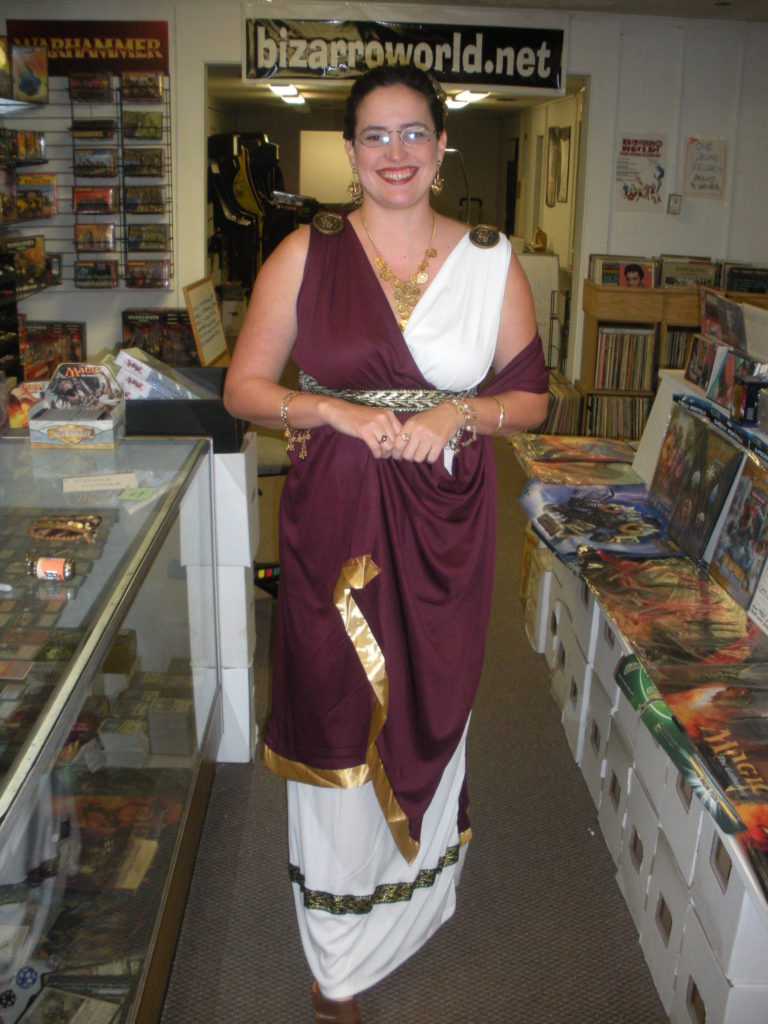
Today, I go to Greece.
This has been a dream since childhood. Now, thanks to a perfectly timed conference on Myth, I finally get to.
We read some Greek Mythology together in elementary school.
I was hooked, reading more and more.
This is surprising, since the mythology was used against me. The boys started calling me Medusa. When they were playing this game, they had to freeze on the playground when they locked eyes with me.
I assumed that I was hideous. I remember consciously making the decision to embrace being smart. I won’t ever be loved for beauty, I thought. But someday, there will be a guy who will love me for being really intelligent.
I took Athena as my patron goddess, although I did eventually (and the details were really hazy here) want a romantic relationship.
I wore owls and prayed to my goddess before tests.
I was too young, of course, to understand that Medusa was actually a gorgeous rape victim.
Greece never lost its allure for me. I routinely found ways to find all Roman history, art, and social structure lacking in comparison. The Greek gods factored in heavily when I taught comparative mythology (Dionysus=Osiris=Jesus). My degree in Theatre–and Theatre itself–owes everything to the Greeks.
Strangely, I’ve felt really numb leading up to this trip. Like I’m in shock.
Like Zeus will see my hubris and send his lightning bolt to fuck up my plans.
Dear Athena, I want to have an amazing time in your patron city. Tell your dad to leave me alone. And if something awful happens there, don’t turn my hair into snakes. Roomba (aka Sisyphus IV) and the cats just wouldn’t know what to do.
My union posted this: “During bargaining this week at UCSB, the UC’s chief negotiator Nadine Fishel said this about Lecturer positions: ‘No one says it’s a gig you want to sign up for.’ WOW. You may ask, is that how little she respects our contribution and commitment to teaching and to our students??
“To her, we say: We consciously made the choice to become teaching faculty at UC. We teach 30%+ of the student credit hours across the UC. We are proud of our students and the work we do everyday. #WeTeachUC“
I’m offended, of course, at the lack of respect the UCs are showing to us. But it’s not surprising, since they’re trying to change our contract to remove the word “faculty,” to take away our offices, to make it impossible to get a merit raise (it’s only nearly impossible now), and to fire us without cause or warning.
But here’s why you should be offended, especially if you’re a student or if you care about students.
Lecturers teach 30%+ of the courses across the UC, and remember that we’re the only teachers whose primary job is teaching. The other classes are taught by research faculty and graduate students.
Now, some of those people are good teachers. And many of them are not. Some aren’t just bad at it; they hate teaching. Most have no training in how to do it. Some graduate students don’t speak English well enough to answer students’ questions. But it doesn’t matter. And once someone has tenure, they can fail their teacher evals, and nothing will happen to them.
We are hired and retained based on one thing–our ability to teach.
The UC representative just re-clarified the UC position–that those of us who prioritize teaching, that those of us who are required to prove we are “excellent” at it, are losers who have signed up for a job in which we shouldn’t even expect to be treated well or fairly.
The UC is admitting that we are treated poorly. They’re saying it’s a feature, not a bug.
Students, you should be insulted that they consider teaching you so beneath them that they actively oppress those of us dedicated to it.
In my last post, I talked about how many daters and many scammers sound exactly the same.
On Thursday, I added someone on Facebook. The guy’s profile mentioned Oxford under education, so I thought he might be someone I’d met (and forgotten) last summer.
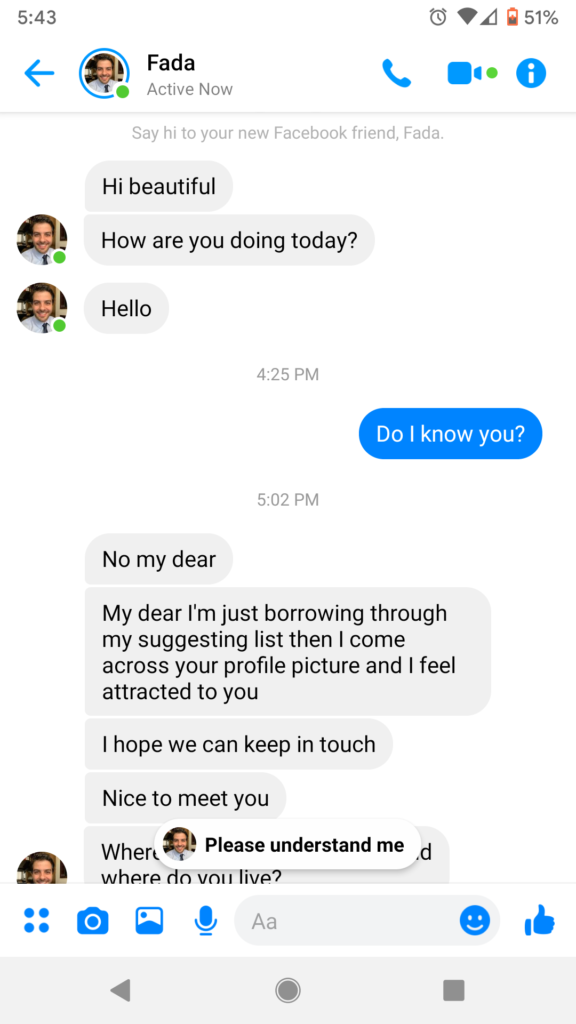
I quickly discovered that was not the case. And I tried to quickly dissuade him.
(I now live in horror that I’m on some “suggesting list” on Facebook.)
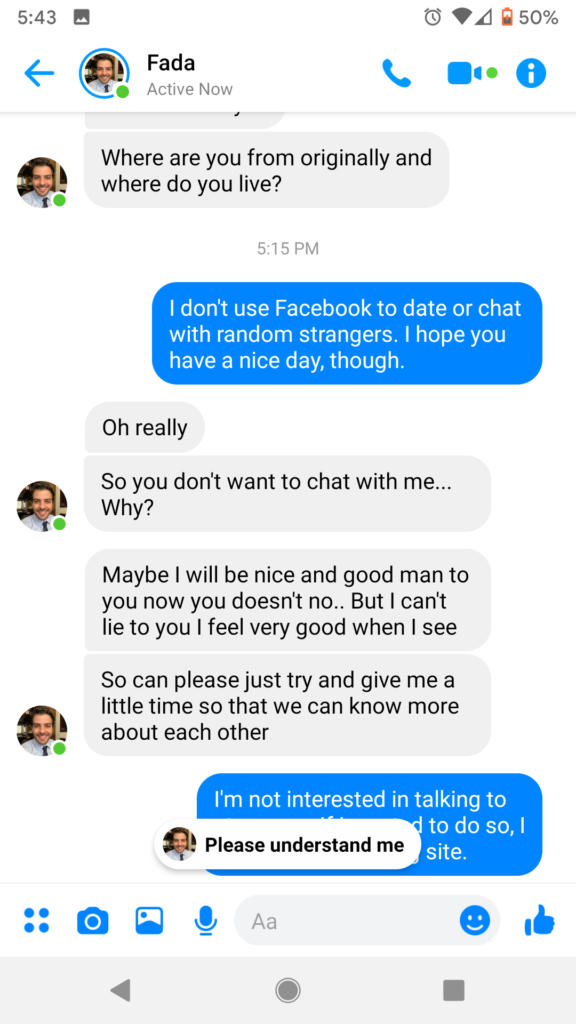
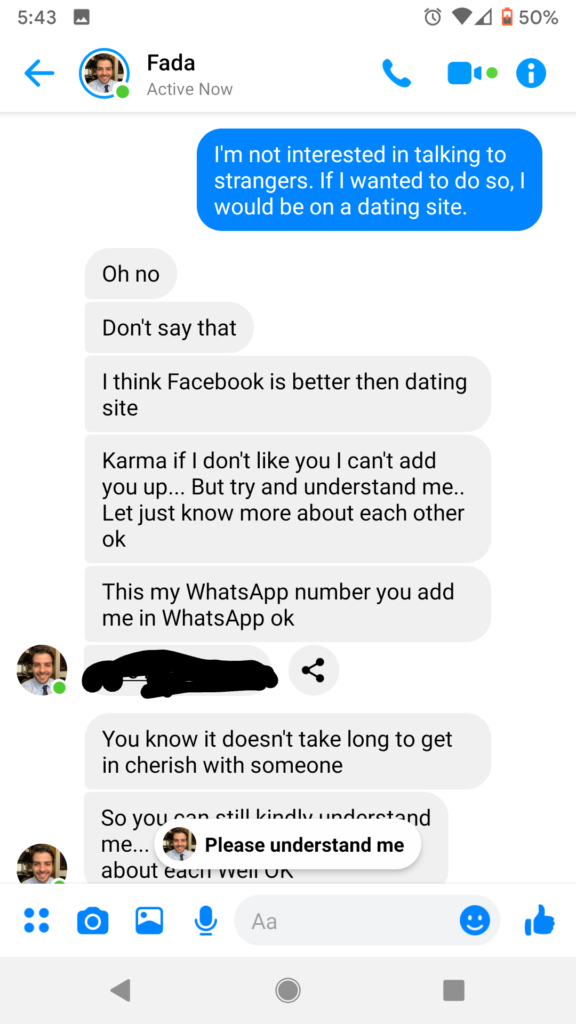
(To post this for you, dear reader, I had to draw on a phone screenshot for the first time.)
Let’s skip ahead, while he keeps telling me I have to talk to him since I’m pretty.
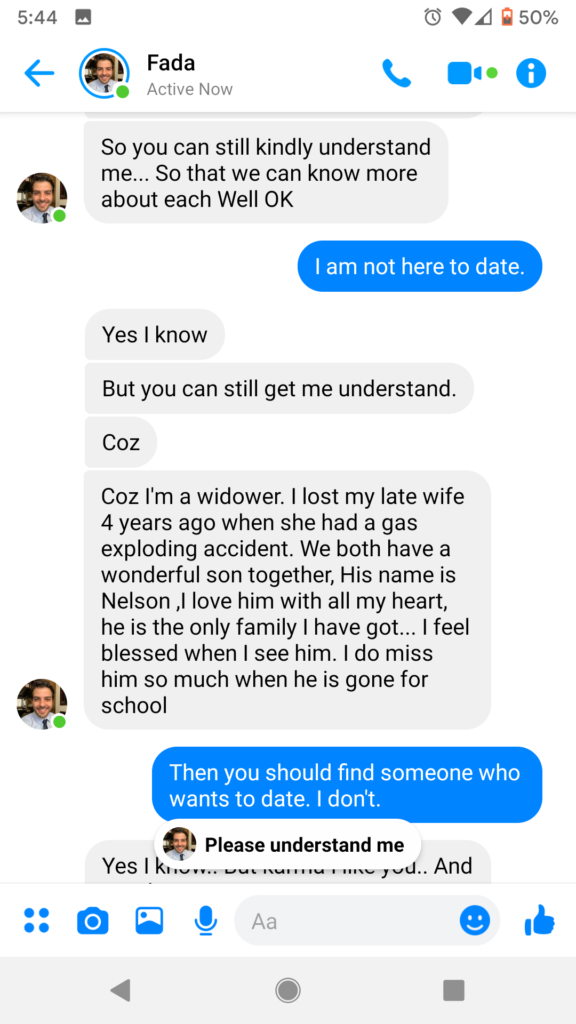
I had been thinking he was just one of those clueless guys who won’t take no for an answer and who have no sense of empathy. But the part with the widower with a wife who died that way gave me deja vu. I’m pretty positive I’ve had another guy on Facebook say that exact thing.
Or else this guy tried this line on me last year, but neither of us really remember.
Let’s skip ahead some more, to where he’s been in love with me for days somehow, even though this conversation started about an hour ago.
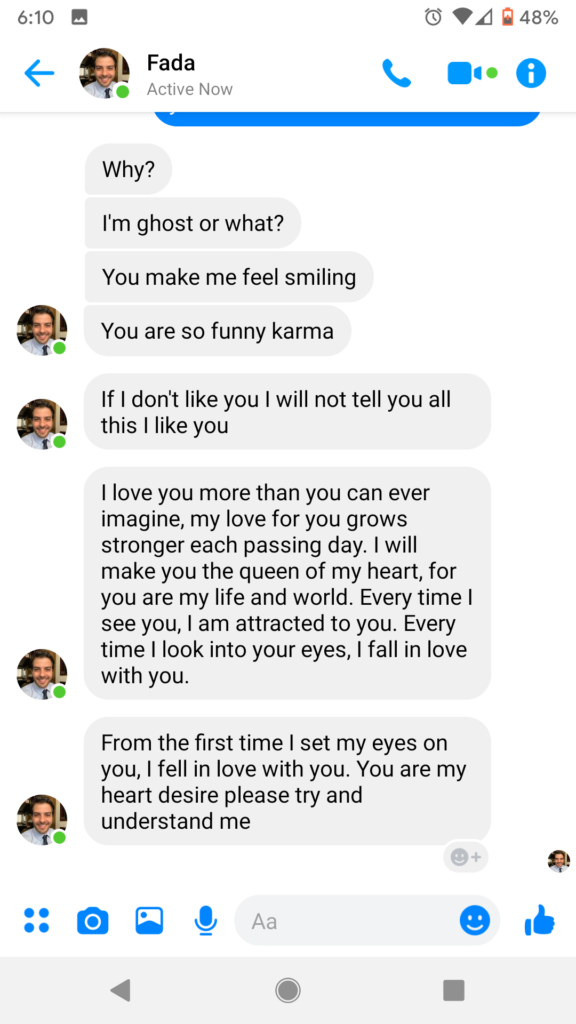
I told him he was ridiculous. I’d already unfriended him, but book group was starting, so I got too distracted to block him.
Now his posts are gone; FB says his account requires verification.
Glad I took the pics for you, dear reader, when I could.
Today, my feed showed friends making the point that more people died from gun violence in New Orleans in one day than died in all of Japan in a year.
THIS IS THE ONLY 1ST WORLD COUNTRY IN WHICH SHIT LIKE THIS HAPPENS.
We are also the only country that is going to make it hard for those who survive the shootings to survive the bills afterwards.
At any given mass shooting, there will be some insured people and some uninsured ones.
Under my current insurance, for example, I am paying a couple hundred dollars a month in premium costs (under single payer, I would be paying much less each month in taxes). Some of my tax dollars also go to provide healthcare for the poor, the elderly, the military, the politicians, etc.
On top of that, a victim under a plan like mine would have to pay just under $1000 for the ambulance, $200 to enter the ER, and copays for tests, treatments, and doctors.
And I have good insurance.
Some victims with insurance will have to fight with insurance company. They will have their insurance company telling them they’re paying the whole bill because they didn’t go to the right ER, that they should have somehow gotten a pre-authorization. They will be denied medications, treatments, and care that insurance deems “unnecessary.” A panel of nonexperts will override the doctor, making more money for the insurance company.
Some victims won’t have insurance, because they’re contractors or because they’re between jobs or because they work for a small company or because they work for a giant company that only gives them 34 work hours a week just so the giant company doesn’t have to help pay for healthcare.
Those victims will be charged just a few thousand, if they’re lucky. Others will be charged tens and hundreds of thousands of dollars to stay alive after someone shot them.
Problems with medical bills will affect victims’ credit. Many will go bankrupt.
(A few years ago, I got sent to a collections agency because I refused to pay for the same ambulance ride twice. It took a year and many infuriating phone calls to straighten it all out.)
Some people won’t be able to return to work without intensive physical therapy; if they’re lucky enough to still have insurance, they’ll be paying a copay at every visit. Some won’t be able to return at all.
A few will have disability insurance, though it will take months to see any money from that, months in which the landlord still needs that rent check.
Some will lose their jobs because they become disabled. They’ll have a year or more of paperwork to certify that are unable to work.
If they’re in Southern/Republican states, they will have to wait two more years after being certified disabled to have access to nonER healthcare.
Some people will be lucky enough to be able to work part time, but if they want insurance, they’ll have to look for a full time job. In our country, even when you work several part time jobs, equaling more than 40 hours/week, you’re still not eligible.
If the person who was shot was the primary breadwinner (and thus the person whose insurance policy covered the household), the whole family may lose their insurance in addition to their income.
If another family member has to quit a job to help a mass shooting victim in the struggle to stay alive, that person loses coverage.
THIS IS THE ONLY 1ST WORLD COUNTRY IN WHICH SHIT LIKE THIS HAPPENS.
My upper-division writing courses are challenging, so I offer some generous extra credit.
One of the ways students can earn it is participation in a book club. I pick a book (one related to the course ideas, often one I want to read), they read it, write a response paper, and meet at the end of the quarter to talk about it.
My favorite choices, ones I’ve used again and again, are Margaret Atwood’s Oryx and Crake, Maus by Art Spiegelman, Eric Weiner’s The Geography of Bliss, and Red Son by Mark Millar.
My Writing in the Health Science students are the most compelled to raise their grades. Many of them have enjoyed Atwood, but we’ve also read Ruth Ozeki’s My Year of Meats, Adam Alter’s Drunk Tank Pink, Alan Alda’s If I Understood You, Would I Have This Look on My Face, Rachel Pearson’s No Apparent Distress, T.R. Reid’s The Healing of America, Paula Kamen’s All in My Head, Leslie Jamison’s The Empathy Exams, Anne Fadiman’s When the Spirit Catches You and You Fall Down, and books by Atul Gawande and Mary Roach, among others.
In a tight quarter system, it’s a much needed chance for students to have a good discussion in a small group, to think through issues in a low-stakes way, and to remember that they do actually like to read. (Many students ask for further book recommendations for the break.)
It’s also a way for me to learn more about them, what they don’t yet know, what moves them, what surprises them.
Recently, for example, a few students in my Writing in Social Justice class said they learned a lot about the Holocaust from Maus–they had never heard of the camps. My premed students learn about patients who weren’t believed, who were told it was all in their head (they didn’t think doctors would ever abandon someone). They learn that our ideas of villainy are completely determined by point of view. They learn great scientists can also be great writers.
I’m not on any dating sites right now, but I keep getting flashbacks.
What’s triggering me?
Spam.
Certain kinds of spammers and certain kinds of men sound exactly alike.
The biggest similarity? Their use of “beloved” and “dear” before I’ve even answered.
This is an instant turn off for me. I know it’s probably a cultural thing, but guys who want dates should know they sound exactly like guys who want my money.
Who said it, would-be spammer or would-be dater?
“dear , i just want to be a friend.”
“hi how ru”
“I am glad to have you beloved”
I happened to be reading Dr. Nadine Burke Harris’s book in my neurologist’s waiting room. He was running late, so I had an hour and a half to take it all in.
Harris is interested in how the effects of childhood trauma follow people into their adult lives, causing chronic and acute illnesses and a shorter life span.
Childhood trauma is measured via the ACE score–a 10-point test to determine how fucked up your childhood was (a point for a dead parent, a point for witnessing your mother being abused, etc.). The score on the test I found online a few years ago, at my doctor’s urging, was 8. The one Harris uses has me at a 7.
Harris notes that there are also cultural childhood adversity problems:
“In rural white communities, the story is about loss of living-wage work and the fallout from rampant drug use. In immigrant communities, it is abut discrimination and the fear of forever being separated from loved ones at a moment’s notice. In African American communities, it’s about the legacy of centuries of inhuman treatment that persist to this day–it’s about boys being at risk when they are playing on a bench or walking home from the store wearing a hoodie. In Native American communities, it is about the obliteration of land and culture and the legacy of dislocation. But everyone is really saying the same thing: I am suffering.
“It is easy to get stuck on your own suffering because, naturally, it is what affects you most, but that’s exactly the mentality that is killing black people, white people, and all people. It perpetuates the problem by framing it in terms of us versus them. Either we get ahead or they get ahead. . . . the science shows us that it is not us against them. In fact, we all share a common enemy, and that common enemy is childhood adversity” (195).
I knew some of the science, but reading it all at once was difficult:
“Twenty years of medical research has shown that childhood adversity literally gets under our skin, changing people in ways that can endure in their bodies for decades. It can tip a child’s developmental trajectory and affect physiology. It can trigger chronic inflammation and hormonal changes that can last a lifetime. It can alter the way DNA is read and how cells replicate, and it can dramatically increase the risk for heart disease, stroke, cancer, diabetes–even Alzheimer’s” (xv).
“A person with an ACE score of seven or more has triple the lifetime odds of getting lung cancer and three and half times the odds of having ischemic heart disease, the number one killer in the United States. If a large study . . . came out tomorrow saying that exposure to cottage cheese tripled your lifetime chances of cancer, the Internet would break and the dairy lobby would hire a crisis-management firm (40).
I have to say, I don’t like my odds.
But like all good books, this one’s stories moved me, scared me, most. One of the patients Harris describes is severely under weight. Something bad happened, and he just stopped growing, stopped thriving.
I don’t remember a lot of things that happened to me early on–my mother wanting to leave my father for his constant womanizing, his giving her a black eye, her fleeing with baby me.
My grandparents often told a story about when I came to live with them when I was 2. I was so small that they took me to a doctor. My grandparents were told that I was okay, but that I would be a tiny thing. But they didn’t believe the doctor, who said I would never make it to 5′. So they gave me small quantities of beer to increase my appetite and milkshakes filled with eggs.
And I wasn’t actually okay. All of a sudden I had life-threatening asthma, requiring frequent hospitalizations.
By the time my grandparents took me in, I was failing to thrive. I somehow hadn’t made that connection before reading this book.
What shook me most, though, was reading about all the studies showing that loving, stable homes can help people recover from trauma.
And I thought about another story my grandmother liked to tell. Their tiny little me was unconscious, and they couldn’t wake me up. They were packing me into the car for the hour trip to the hospital. Grandma saw (Grand)daddy packing his pocket with cigars and asked what he was doing.
“They’re going to want to keep her overnight. And I’m not leaving her there alone.”
And that was why, thinking about the loving, stable home my grandparents tried to give me, I cried in my neurologist’s waiting room.
Trump wants to be a Florida resident instead of a New York one. The Washington Post reports: “But despite paying ‘millions of dollars in city, state and local taxes each year,’ he complained, he had been ‘treated very badly by the political leaders of both the city and state.’”
In essence, Trump is saying that because he pays millions in taxes, he should be treated well.
Instead of fairly.
Let’s leave aside whether he actually pays millions (this is disputed) and the clear implication that Trump sees his taxes as some kind of bribe or tip, designed to get better service.
Trump DOES get treated better, because he was born wealthy. He had advantages and chances the rest of us didn’t.
When the rest of us go bankrupt, we can’t claim it was because we’re smart. We have to pay our bills. And a single bankruptcy ruins our credit. Simply because he’s Trump, he gets to keep borrowing and borrowing, despite four bankruptcies.
When the rest of us commit crimes, we get arrested. In many cases, we can’t afford good defenses or to post bail. We appear in handcuffs. Rich people have to really fuck up to be arrested. Most of the time, they get to turn themselves in, they are released without bail, and they get to turn up with their high priced lawyers, all wearing lovely suits.
Because we have lower income, our high tax burden affects us more. And even Trump’s beloved Fox reports that low income people are more likely to be audited.
Please stop bitching about how badly you’re being treated, Mr. Trump. You literally don’t know how good you have it.
Last week, I picked up a chicken at Safeway (about 6 lbs for $6).
I cooked it in my crockpot (on low all day with herbs). Here’s what we got out of it.
2 roast chicken meals
2 bbq chicken sandwiches
2 servings of chicken tacos
2 servings of hoisin chicken wraps
5 servings of chicken parmesan casserole
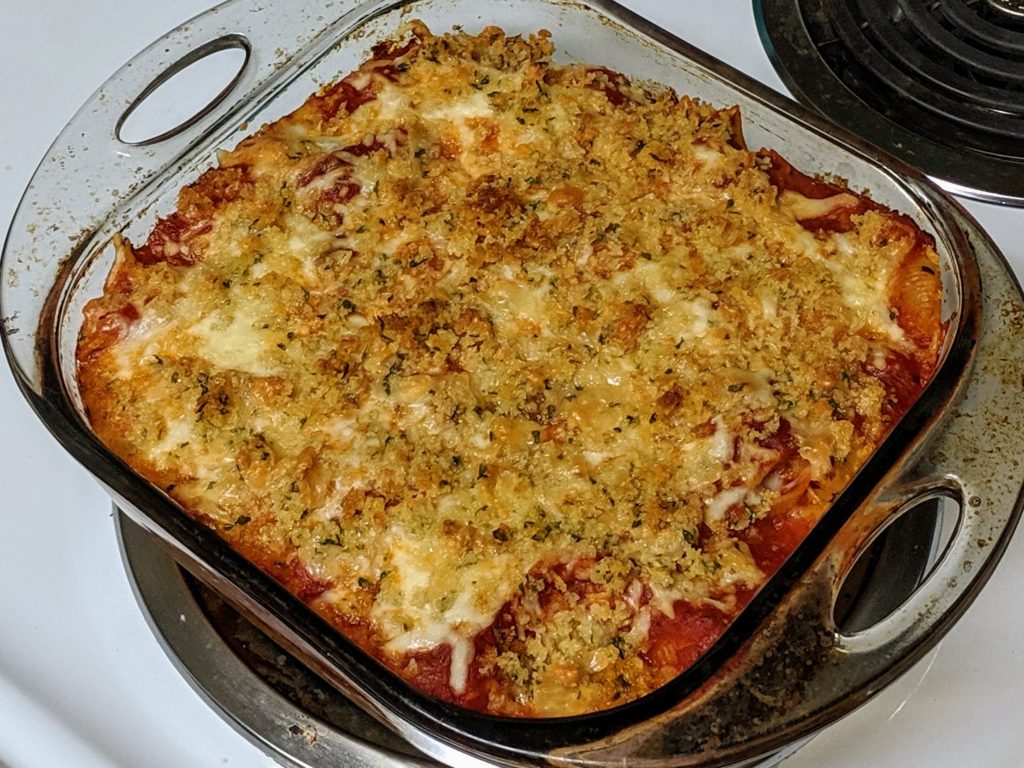
If you’ve ever wondered what I do when I’m not grading, it’s making plans like these.


Recent Comments